 David Keele and Eliza Jane Geary
Possible wedding photo 1878 Panaca, Lincoln, Nevada
left half of old stereoscope photo
Possession of Kelley Bollinger
of Cottonwood Heights, Utah

of Cottonwood Heights, Utah

 The old Samuel Keele Ranch between Panaca and Caliente, Nevada, taken in 1912. This old ranch was a favorite meeting place for the family in the summertime. These are the descendants of David Keele, son of Samuel Keele: (Left to right) Back row, standing: John Raymond Lee, husband of Annie Keele and son of John Nelson Lee; Annie Keele Lee, daughter of David Keele; Myrtle Lee, daughter of Annie; Quincy Keele, son of David; Roxa Edwards Keele, wife of Quincy; James Harold Lee, son of Annie; Leah Burdetta Lee, daughter of Annie; Hazel, daughter of Eathel Keele Lee, daughter of David; Frances Marion Keele, son of David; Howard Geary Keele, son of David. First row: Melba Lee, daughter of Annie; Lester Nelson Lee, son of Annie (standing on chair). Sitting on bench: Jesse Raymond, son of Annie; Irita Keele, daughter of David; Estella Lee, daughter of Annie; Margaretta, daughter of Annie; David Keele, son of Samuel. Sitting on ground: Guy Willis Lee, son of Annie; Orval Keele, son of David.
 Samuel Keele Ranch with wild hay.
David Keele's son Orval Keele front right corner.
Photo courtesy of
Effie Sholes Keele Collection
in possession of
Kristin Long Osterbaad
of Madras, Oregon
 |
| David Keele Ranch today |
 1926 David Keele with wagon and horses.
The small horse is the mother
of the bigger horse,
sorrel with a stripe in the face.
A big black stallion.
Photo courtesy of
Effie Sholes Keele Collection
in possession of
Kristin Long Osterbaad
of Madras, Oregon
 Cottonwoods on the old Keele wild hay ranch
Photo courtesy of
Effie Sholes Keele Collection
in possession of
Kristin Long Osterbaad
of Madras, Oregon
 Cabin on Keele Ranch
where Eliza Jane Geary Keele,wife of David Keele
gave birth to Francis Marion Keele
Photo courtesy of
Effie Sholes Keele Collection
in possession of
Kristin Long Osterbaad
of Madras, Oregon
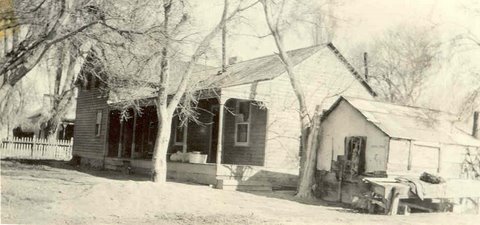 David Keele home in Panaca Nevada
built in 1917
Photo courtesy of
Effie Sholes Keele Collection
in possession of
Kristin Long Osterbaad
of Madras, Oregon

 David Keele Organ
In possession of
Erik Thornton
2nd great grandson of
David Keele
Photo courtesy of
Effie Sholes Keele Collection
in possession of
Kristin Long Osterbaad
of Madras, Oregon
 Francis Marion Keele and Eliza Jane Geary Keele
Photo courtesy of
Effie Sholes Keele Collection
in possession of
Kristin Long Osterbaad
of Madras, Oregon

 David Keele and sons
Panaca, Nevada
Left to right-Orval Keele, George Quincy Keele,
father David Keele,
Francis Maron Keele, Howard Keele.
Photo courtesy of
Effie Sholes Keele Collection
in possession of
Kristin Long Osterbaad
of Madras, Oregon

David Keele Family
Panaca, Nevada November 1927
David Keele seated center, dressed in overalls holding
Jean Elizabeth Keele, daughter of
Francis Marion and Effie Keele, kneeling center front.
Eliza Jane Geary Keele standing with scarf around neck
left of patriarch David Keele.
George Quincy and Roxy Keele rear far left.
Others to be determined, suggestions welcome.
Photo courtesy James Horald Lee Collection
Possession James H. Lee Junior
of Salt Lake City, Utah

 David Keele children February 1955
at the funeral of their brother
Francis Marion Keele
Back: Orval Keele of Los Angeles, California, Howard Keele of
Sparks, Nevada, George Quincy Keele of Reno, Nevada.
Front: Ireta Keele Fitzgerald of Reno, Nevada, Leah Keele Ellison of Caliente, Nevada, Eathel Keele Lee of Panaca, Nevada.
Photo courtesy of
Effie Sholes Keele Collection
in possession of
Kristin Long Osterbaad
of Madras, Oregon


Eliza Jane Geary Keele and husband David Keele
(Eliza didn't want her picture taken!)
Contributed by Charles Martin of Hollister, California
and Kelley Bollinger of Cottonwood Heights, Utah.
Also Photo courtesy of
Effie Sholes Keele Collection
in possession of
Kristin Long Osterbaad
of Madras, Oregon
 Eliza Jane Geary Keele
Contributed by Charles Martin of Hollister, California
and Kelley Bollinger of Cottonwood Heights, Utah
and Kelley Bollinger of Cottonwood Heights, Utah
 David Keele born 10 June 1854 in Farmington, Davis, Utah to Samuel Keele and Annie Elizabeth Hess, married 29 March 1878 in St. George, Washington County, Utah to Eliza Jane Geary born 6 April 1859 in Cedar City, Utah to John Thomas Geary and Sophia Fryer. David died 29 November 1938 in Panaca, Lincoln, Nevada and is buried in the Panaca Cemetery. Eliza died 9 January 1931 in Panaca, Lincoln, Nevada, and is buried in the Panaca Cemetery.
 David Keele
 Born 10 June 1854
Died 29 November 1938
Buried Panaca City Cemetery, Nevada
 Eliza Jane Geary Keele
Born 6 April 1859
Died 9 January 1931
Buried Panaca City Cemetery, Nevada


Obituary of David W. Keele
Contributed by Kelley Bollinger of Cottonwood Heights, Utah
 Portraits of
 David Keele and Eliza Jane Geary Family and spouses
Contributed by Kelley Bollinger
of Cottonwood Heights, Utah
David Keele and Eliza Jane Geary
Elzada Keele and Charles Alonzo Kelley
John Raymond Lee and Annie Eliza Keele
Francis Columbus Lee and Eathel Keele
Jessie William Keele
Angus Melvin Lee and Leah Keele
Roza Edwards and George Quincy Keele
Effie Charlotte Sholes and Francis Marion Keele
Howard Geary Keele and Ruby Langford
William Vern Fitzgerald and Ireta Keele
Orville Geary Keele and Isabel Olsen


1860 Census in Salem, Sanpete County, Moroni Post Office David Keele with parents.
1870 Census in Panaca, Washington County, Utah Territory David Keele with parents.
1880 Census Meadow Valley Wash, Lincoln, Nevada David Keele 27, Eliza J 21, and Elzada 11m.
1900 Census Panaca, Lincoln, Nevada David Keele 45, Eliza 41, Ethel 17, Jessie W 12, Lea 8, Geo L 7, and Francis M 4, 7/9 children alive, married at age 22.
1910 Census Panaca, Lincoln, Nevada David Keele 55, Liza J 51, George Q 17, Francis M 14, Howard G 10, Ireta 7, and Arville 5, a carpenter, married 29 years, 9/12 children alive.
1920 Census Panaca, Lincoln, Nevada David Keele 65, Eliza J 60, Marion F 23, Howard G 19, Ireta 17, Orval 14, Leah 29, grandson Lorin M 9, and grand daughter Fawn 5.
1930 Census Panaca, Lincoln, Nevada David Keele 75, Eliza J 70.
1931 January 9th Eliza Jane dies and is buried in Panaca, Lincoln, Nevada Cemetery.
1938 November 29th David dies and is buried in Panaca, Lincoln, Nevada Cemetery.
"When a death occurred in Panaca, George Lee Edwards, owner of a sawmill would use “the choice pieces of lumber he had kept for use by himself in building caskets. At the time of death, he and David Keele would set to work building a casket. When completed, the casket looked just as nice as any store-purchased one. The sides were lined with cotton or wool bats covered with white silk and the outside was covered with white brocaded velvet. A silver plate was placed on top and six silver handles to match were attached. These latter supplies were kept on hand at the local store. Since there were no undertakers in town or within hundreds of miles, my parents helped to care for the dead by washing and laying them out, and sitting up with the body, keeping it packed in ice so it wouldn’t become discolored. The corpse was dressed shortly before burial. My mother helped make many a burial suit. The total cost of the burial would not exceed twenty-five dollars, as everyone donated their time and effort. It did not matter whether the deceased was a Church member or not, everyone was treated the same.”—Roxa Edwards Keele-(wife of George Quincy Keele) Our Pioneer Heritage Vol. 20, p183
Daughter Elzada Keele born 28 June 1878/9 Panaca, Lincoln, Nevada and married 19 April 1897 in Panaca, Lincoln, Nevada to Charles Alonzo Kelley born 28 July 1867 in Payson, Utah to Russell Thomas Kelley and Mary Ann Scriggins. Alonzo died 3 December 1923 Hot Lake, Oregon, and buried Alamo, Lincoln, Nevada. Elzada died 11 July 1914 in Alamo, Lincoln, Nevada and is buried in Alamo.
Elzada Keele family data courtesy of cousins Kelley Bollinger of Cottonwood Heights, Utah
and Charlie Martin of Hollister, California.
and Charlie Martin of Hollister, California.


Elzada Keele and husband Charles Alonzo Kelley
Photo Contributed by Charles Martin of Hollister, California
Photo Contributed by Charles Martin of Hollister, California
and Kelley Bollinger of Cottonwood Heights, Utah
_Kelley.jpg) Cousins Eva Lee and Elzada Keele
Cousins Eva Lee and Elzada KeelePhoto contributed by Charles Martin of Hollister, California
and Kelley Bollinger of Cottonwood Heights, Utah
 Elzada Keele Kelley tombstone
29 June 1878-11 July 1914
Alamo Cemetery, Nevada
Contributed by Kelley Bollinger
of Cottonwood Heights, Utah
 Siblings Milton Kelley, Vera Kelley,
David Kelley, and Edgar Kelley
1 November 1953
at Elzada's Keele Kelley's tombstone
Alamo Cemetery, Alamo, Nevada
Contributed by Kelley Bollinger,
of Cottonwood Heights, Utah
 Siblings Leah Kelley, Eathel Kelley,
and Charles Milton Kelley @ 1905
Contributed by Kelley Bollinger
of Cottonwood Heights, Utah
 Infant Portrait of Eathel Lorina Kelley born 1898
Contributed by Kelley Bollinger
of Cottonwood Heights, Utah
 Eathel Lorina Kelley Overson
and Elmer Ray Overson
Contributed by Kelley Bollinger
of Cottonwood Heights, Utah
Eathel Lorina Kelley born 19 December 1898 in Delamar, Lincoln, Nevada and married 27 November 1917 Pocatello, Bannock, Idaho Elmer Ray Overson born 22 January 1893 Leamington, Millard, Utah to Frederick Hiram Overson and Melinda "Minnie"Wilcox. Elmer died 10 August 1971 Oak dale, Stanislaus, California, buried Klamath Memorial Park, Klamath Falls, Oregon. Eathel died 18 February 1948 Klamath Falls, Klamath, Oregon, and is buried there. 1910 Census Alamo, Lincoln, Nevada, 1920 Census McGill, White Pine, Nevada Elmer Overson 26, mail man at copper mill, Eathel 22, sister-in-law Vera. 1930 Census Orindale, Klamath, Oregon Elmer
Children: Edith Rae Overson born 9 February 1922 Rock Springs, Sweet Water, Wyoming, and married 1 October 1942 Carson City, Nevada Vernard Joseph Goodwin born 9 April 1911 Richmond, Virginia to Vernard Saliva Vice Goodwin and Nettie Pearl Bush. Children: Vernard Dean Goodwin born 7 July 1946 Klamath Falls, Oregon. Rodney Lee Goodwin born 19 December 1947 Klamath Falls, Oregon. Timothy Ray Goodwin born 9 June 1953 Chico, California.
Shirley Muriel Overson born 25 January1924 Rock Springs, Sweet Water, Wyoming, married 8 August 1943 in Klamath Falls, Klamath, Oregon to William Momiduke Hairrell born 29 January 1922 William Momiduke Hairrell and bBeulah Bernice Hensley. Shirley died 8 December 2003 San Mateo, San Mateo, California. Her children: Regina Jo Hairrell Palavos born 12 July 1944 Klamath falls, Oregon. Victoria Ann Hairrell Galley born 24 June 1946 Klamath Falls, Oregon. William Bradley Hairell born 5 November 1947 Klamath Falls, Oregon.
Charles Raymond Overson born 27 October 1927 McGill, White Pine, Nevada, married 2 January 1948 Klamath Falls, Klamath, Oregon, Ramona Lee Fogel born 22 August 1929 Klamath falls, Oregon to Lindley Wilson Fogel and Lola Myrtle Smith. Child: Ramona Rae Overson. Charles died 17 December 1996 Klamath Falls, Klamath, Oregon.
Children: Edith Rae Overson born 9 February 1922 Rock Springs, Sweet Water, Wyoming, and married 1 October 1942 Carson City, Nevada Vernard Joseph Goodwin born 9 April 1911 Richmond, Virginia to Vernard Saliva Vice Goodwin and Nettie Pearl Bush. Children: Vernard Dean Goodwin born 7 July 1946 Klamath Falls, Oregon. Rodney Lee Goodwin born 19 December 1947 Klamath Falls, Oregon. Timothy Ray Goodwin born 9 June 1953 Chico, California.
Shirley Muriel Overson born 25 January1924 Rock Springs, Sweet Water, Wyoming, married 8 August 1943 in Klamath Falls, Klamath, Oregon to William Momiduke Hairrell born 29 January 1922 William Momiduke Hairrell and bBeulah Bernice Hensley. Shirley died 8 December 2003 San Mateo, San Mateo, California. Her children: Regina Jo Hairrell Palavos born 12 July 1944 Klamath falls, Oregon. Victoria Ann Hairrell Galley born 24 June 1946 Klamath Falls, Oregon. William Bradley Hairell born 5 November 1947 Klamath Falls, Oregon.
Charles Raymond Overson born 27 October 1927 McGill, White Pine, Nevada, married 2 January 1948 Klamath Falls, Klamath, Oregon, Ramona Lee Fogel born 22 August 1929 Klamath falls, Oregon to Lindley Wilson Fogel and Lola Myrtle Smith. Child: Ramona Rae Overson. Charles died 17 December 1996 Klamath Falls, Klamath, Oregon.


Milton Kelley and wife Ida Loretta Hansen KelleyPhoto Contributed by Charles Martin of Hollister, California
and Kelley Bollinger of Cottonwood Heights, Utah
Charles Milton Kelley born 14 May 1900 Panaca, Lincoln, Nevada, and married 10 September 1917 Panaca, Lincoln, Nevada to Ida Loretta Hansen born 21 July 1898 Panaca, Lincoln, Nevada to Charles Fredrick Hansen and Hannah Elizabeth Wadsworth. Ida died 10 August 1984 Longview, Cowlitz, Washington, and buried Hudson Cemetery, Rainier, Columbia, Washington. Charles died 27 September 1989 in Longview, Cowlitz, Washington, cremation and services Chapel of the Chimes, Portland, Oregon. 1920 Census McGill, White Pine, Nevada. 1930 Census-
 Ida Loretta Hansen Kelley Obituary
(The Clatskanie Chief August 14 1984)
Contributed by Kelley Bollinger
of Cottonwood Heights, Utah
 Charles Milton Kelley Obituary
(The Clatskanie Chief October 12, 1989)
Contributed by Kelley Bollinger
of Cottonwood Heights, Utah
Children:
Obituary of Sylvia E. "Sally" Ostrom
(Courtesy of son Kevin and Susan Pointer)
"A proud Irish woman, Sylvia E. Ostrom, 91, of Longview died June 25, 2010 at the Hospice Care Center.
She was born July 1, 1918 in Panaca, Nevada to Charles Milton and Ida L. (Hansen) Kelley. She was a graduate of Henley Union High School in Henley, Oregon. Sally lived in Rainier, Oregon from the mid-1940's to 1989, when she moved to Longview.
She married Harry M. Pointer in Yakima, Washington April 27, 1939. They had a son and later divorced.
On July 19, 1947, she married Gordon M. Ostrom in Longview, Washington. He preceded her in death Feb. 4, 1990.
Sally worked in Yakima canneries in her early years, spent many years as a local waitress, seven of those at Ferguson's Restaurant and retired as a clerk for Silver Eagle Trucking Co. in 1973. Later, she and Gordon delivered The Daily News between Rainier and Goble.
Sally was a member of Robert Gray Baptist Church. She created beautiful embroidery work and enjoyed Bible study, crafts, bingo and Delaware Plaza trips. She had a strong work ethic and was always busy.
She is survived by a son and daughter-in-law, Kevin and Susan Pointer; four grandchildren, Rick Pointer, Brian Pointer, Rob Pointer and Shannon Weber; a niece Sheila Hilles and seven great-grandchildren.
In addition to her husband, Sally was preceded in death by her parents; a brother, Fred Kelley and a nephew, Chuck Evans.
A Private service will be held. Memorial contributions may be made to the Community Home Health and Hospice, P.O. Box 2067, Longview, Wa 98632."
 Shannon Stobie Weber born 5 June 1977,
Sally Ostrom born 1 July 1918,
and Susan Jensen Pointer born 1 September 1949.
(Photo courtesy Susan and Kevin Pointer,
and Kelley Bollinger of
Cottonwood Heights, Utah)
(Photo courtesy Susan and Kevin Pointer,
and Kelley Bollinger of
Cottonwood Heights, Utah)
 Top Row: Richard Pointer, Kevin Pointer, Sally Ostrom,
Brian Pointer, Rob Pointer.
Bottom Row: Madline Pointer born 1988 (Rick's),
Timothy and Erick Pointer 1995 (Brian's twins),
Joe Barteluce 1993 (Brian's stepson),
Samantha Pointer 1990 (Rob's).
Contributed by Kelley Bollinger
of Cottonwood Heights, Utah
from Susan Pointer,
daughter-in-law.
 Sylvia Elzada "Sally" Kelley Ostrom
born 1 July 1918 Panaca, Nevada
died 25 June 2010 Longview, Washington
Photo Contributed
by Kelley Bollinger
of Cottonwood Heights, Utah
from Susan Pointer
daughter-in-law
Charles Frederick Kelley born 11 July 1928 Sutter Creek, Amador, California and married 25 November 1949 Betty Jean Guilkay born 10 January 1929 Longview, Cowlitz, Washington to John Harley Guilkay and Daisy Ethel Aken. Betty died 7 October 1998 in Longview, Cowlitz, Washington. Charles died 20 February 2010 Rainier, Columbia, Oregon. His adopted son from Betty Jean’s previous marriage Charles Fred (Evans) Kelley born 8 March 1947 in Longview, Cowlitz, Washington and died 1 July in Portland, Multnomah, Oregon of cancer. Their daughter Sheila Rhea Kelley born 20 July 1950 in Longview, Cowlitz, Washington married Hilles, then Dahlman, with two children Michael Dahlman of Eugene, Oregon and Mikala Dahlman Togikawa of Lake Oswego, Oregon.

Leah Naoma Kelley
Photo Contributed by Charles Martin
of Hollister, California
and Kelley Bollinger of Cottonwood Heights, Utah
 Leah Naoma Kelley Avery
Photo contributed by Kelley Bollinger
of Cottonwood Heights, Utah
 Leah Kelley Avery headstone
30 may 1901-4 January 1982
Lakewood Cemetery
Hughson, Stanislas, California
Photo contributed by Kelley Bollinger
of Cottonwood Heights, Utah
 Leah Kelley Avery and Earl Alonzo Avery Family Portrait
Front row: Farrel Avery Martin, Earl Alonzo Avery,
Leah Keele Avery, Gerald Earl Avery,
Flora Lucille Avery Santos.
Back row: Charles Eugene Avery, David Arnold Avery
Photo contributed by Kelley Bollinger
of Cottonwood Heights, Utah
Leah Naoma Kelley born 30 May 1902 Annabelle, Sevier, Utah and married 27 August 1917 Pocatello, Bannock, Idaho Earl Alonzo Avery born 19 March 1897 Demsey, Bannock, Idaho, to John Alonzo Avery and Hattie Maria Bybee. Earl died 5 April 1964 Modesto, Stanislaus, California, and buried Lakewood Cemetery, Hughson, Stanislaus, California. Leah died 4 June 1982 Gilroy, Santa Clara, California and is buried in Lakewood Cemetery, Hughson, (Modesto) Stanislaus, California. 1920 and 1930 Census Lava Hot Springs, Bannock, Idaho.
Children:  Gerald Earl Avery - A Life Sketch ( Click to download pdf of entire life sketch)
Researched, written and contributed by Gerald Earl Avery - A Life Sketch ( Click to download pdf of entire life sketch)
Charles Martin
of Hollister, California
1 January 2012
Nephew to
Gerald Earl Avery (1918-1960)
Flora Lucille Avery born 11 January 1920 Lava Hot Springs, Bannock, Idaho and married in Reno, Washoe, Nevada 22 May 1939 Elmer John Santos born 20 October 1916 Alviso, Santa Clara, California to John Joseph Santos and Helen Amelia Silva. Elmer died 14 November 1982 Gilroy, Santa Clara, California, buried St. Mary's Cemetery, Gilroy. Flora died 14 March 1973 Gilroy, Santa Clara, California, and buried St Mary's Cemetery in Gilroy. Children: Pauline Ann Santos born 4 March 1940 Gilroy Santa Clara, California, Betty Lou Santos born 9 October 1943 Gilroy, Santa Clara, California, and Roger Lee Santos born 8 April 1945 Gilroy, Santa Clara, California.
Charles Eugene Avery born 28 October 1922 McGill, White Pine, Nevada and married 3 April 1943 in Reno, Washoe, Nevada at the Reno Methodist Church Ellwanda Fallis (Wanda) born 14 November 1923 in Clovis, New Mexico to Elmer Fallis and Maud Mae Tomas. Ellwanda died 20 January in Joaquin, California with the last name of Marshall. Children: Sharon Avery born 11 September 1944 Modesto, California. Lynn Eugene Avery born 29 November 1949 Modesto, California. Charles married 12 November 1960 Reno, Nevada Judith Delores Keyes born 20 June 1943 Arkadelphia, Arkansas. Children: Rick Eugene Avery born Modesto, Stanislaus, California and Scott E. Avery born Modesto, Stanislaus, California. Charles died 16 March 1995 in Fresno, Fresno, California, cremated, with last residence on Social Security listed as Elkton, Douglas, Oregon.
Loren Avery born 21 February 1924 McGill, White Pine, Nevada and died 24 March 1924 McGill, White Pine, Nevada.
Farrel Avery born 26 April 1926 McGill, White Pine, Nevada and married 17 May 1944 in Modesto, Stanislaus, California to Sam Martin born 12 September 1919 Hollister, San Benito, California and died 19 July 1990 Hollister, San Benito, California. Farrel lives in Hollister, California as of April 2010.
Sam Martin


 Farrel Avery Martin and son Charles Martin
of Hollister, California
Independence Rally 2005
Photo courtesy Charles Martin
_Martin_life-story.jpg) Life Story of Farrel Avery Martin
Life Story of Farrel Avery Martinof Hollister, California
Robert Dale Avery born 20 April 1930 Lava Hot Springs, Bannock, Idaho, married 4 June 1950 Reno, Washoe, Nevada to Doris Jean Largent born Checotah, Oklahoma 25 November 1932 to Emery Eslus Largent and Mary Belle Hill. Doris died 1987. Children: Rhonda Renee Avery born 29 March 1953 Modesto, California, Richard Michael Avery born 25 July 1955 Turlock, California, Robert Dale Avery II born 8 July 1957 Turlock, California, Mickle Stanley Avery 20 October 1958-2003, and Bradley Eugene Avery born 25 September 1959 Turlock, California. Robert married Betty Martin. Married Adele Kanaga 9 May 1992 Oakland, Alameda, California. Married Louise Spohn August 2004 California.
David Arnold Avery born 18 October 1938 Gilroy, Santa Clara, California and married 2 February 1958 Modesto, Stanislaus, California Billie Durr born 15 January 1940 Nebraska City, Otoe, Nebraska.
 David Lyle KelleyContributed by daughter Kelley Bollinger
of Cottonwood Heights, Utah
and Charles Martin of Hollister, California
David Lyle Kelley born 10 June 1904 in Delamar, Lincoln, Nevada and married 24 September 1943 Salt Lake City, Utah to Erma Jean Marshall born 11 March 1918 Salt Lake City, Utah, to John McCoubrey Brown Marshall and Verna Jean Horrocks, died 30 January 2000 Salt Lake City, Utah, buried Salt Lake City Cemetery. David died 21 November 1970 in Salt Lake City, Utah, buried Salt Lake City Cemetery. Child: (Kelley) Maureen Erma Kelley born 5 September 1954 Las Vegas, Nevada, married 27 November 1974 Salt Lake City, Utah Ted Bollinger born 28 January 1951 Salt Lake City, Utah to Kenneth Harlow Bollinger and Veloy Tucker. Children: Michael Ted Bollinger born 29 December 1976 Salt Lake City, Utah, Mindy Linn Bollinger born 19 June 1979 Salt Lake City, Utah, and Christopher Bollinger.


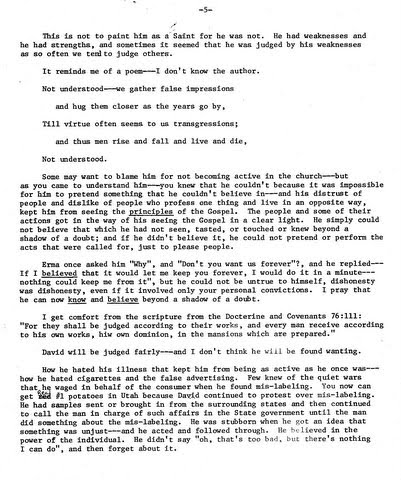
 David Lyle Kelley life story
Contributed by daughter Kelley Bollinger
of Cottonwood Heights, Utah
 David Lyle Kelley
 Contributed by daughter Kelley Bollinger
of Cottonwood Heights, Utah
 Davie Lyle Kelley Obituary
Contributed by daughter Kelley Bollinger
of Cottonwood Heights, Utah


 Erma Marshall Kelley Life Story
Contributed by daughter Kelley Bollinger
of Cottonwood Heights, Utah

 Photo of Daughter Kelley Bollinger
of Cottonwood Heights, Utah
 Kelley Bollinger in her Family History Room
between photos of her parents and big ancestral chart
at home in Cottonwood Heights, Utah
with cousin
Andrea Lee Conley
of Pleasant Grove, Utah
April 2010
 Kelley Bollinger and Andrea Conley
in Kelley's Family History Room
at home in Cottonwood Heights, Utah
April 2010
 Kelley Bollinger, Kelley Family Historian,
at home in Cottonwood Heights, Utah
April 2010
 Outdoor hunting carryall created
by David Lyle Kelley
Photo contributed by daughter Kelley Bollinger
of Cottonwood Heights, Utah
 Summer 1969
Special several week trip visiting relatives
Back: Maureen Kelley, Erma Marshall Kelley,
Leah Kelley Avery. Front: Charles Martin
 Special trip-1969
Charles Martin, David Lyle Kelley,
Maureen Kelley, Leah Kelley Avery
Photo contributed by Kelley Bollinger
of Cottonwood Heights, Utah
Flora Kelley born 16 February 1906 Panaca, Lincoln, Nevada, died 24 October 1906 in Panaca, Lincoln, Nevada, and buried Panaca, Lincoln, Nevada.

Edgar Kelley
Contributed by Charles Martin of Hollister, California
and Kelley Bollinger of Cottonwood Heights, Utah
Edgar Kelley born 22 February 1908 in Alamo, Lincoln, Nevada and married 23 September 1944 Salt Lake City, Utah Norma Jones born 16 April 1920 Salt Lake City, Utah, to William Arthur Jones and Selena Jane Evans. Norma died 12 August 2005, and buried Larkin Sunset Gardens in Draper, Utah. Edgar died 27 August 1989 in Salt Lake City, Utah and is buried in Salt Lake. 1910 Census Alamo, Lincoln, Nevada, 1920 Census Lava Hot Springs, Bannock, Idaho.
Children:
 Edgar and Norma Jones Kelley Family Photo
Contributed by Kelley Bollinger
of Cottonwood Heights, Utah
 Norma Jones
 Seminary class South High
Gordon B. Hinkley- teacher far right
contributed by Kelley Bollinger
of Cottonwood Heights, Utah
 Edgar Kelley obituary and funeral program
Contributed by Kelley Bollinger
of Cottonwood Heights, Utah
 Headstone for Edgar Kelley
and Norma Jones Kelley
Edgar born 22 February 1908
died 27 August 1989
Norma born 16 April 1920
died 12 August 2005
Sunset Gardens in Sandy, Utah
Photographed and Contributed
by Kelley Bollinger
of Cottonwood Heights, Utah

Steven Tim Kelley
Son of Edgar and Norma Kelley
Headstone
born 10 August 1954
died 21 September 1974
Photographed and Contributed
by Kelley Bollinger
Cottonwood Heights, Utah
 Edgar Kelley-Deseret News 3 July 1976
draftsmen working with tools
used to build the Salt Lake temple
Contributed by Kelley Bollinger
of Cottonwood Heights, Utah
used to build the Salt Lake temple
Contributed by Kelley Bollinger
of Cottonwood Heights, Utah
 Norma Jones Kelley
Contributed by Kelley Bollinger
of Cottonwood Heights, Utah
Norma Jones Kelley Obituary
"Norma Jones Kelley 1920 ~ 2005 Our sweet, loving, caring and devoted mother, grandma, and great-grandma passed away August 12, 2005 of natural causes due to old age. Born April 16, 1920 to William A. Jones and Selina Evans Jones. Married Edgar Kelley September 23, 1944. Two years later their marriage was solemnized in the Salt Lake LDS Temple. Mom was a very active and faithful member of the Church of Jesus Christ of Latter-day Saints. Residing her married life in the Liberty Park and Liberty Wards carrying out many positions assigned to her by church leaders. Mom never had to work until her kids were raised then got bored and went to work for the Food Service Dept. at the church office building until health problems made it impossible for her to work any longer. Mom was preceded in death by her loving husband, Edgar, of 45 years; her son, Steven; her parents; and three sisters, Rhea, Florence, and Marvel. Mom is survived by her three daughters who meant the world to her, Vickie (Dave) Carpenter, Karen (Robert) Duncan, and Kathy(Floris) Sudweeks; her six grandchildren who she adored, Rondi (Kris) Weigand, Cami (Brad) Haycock, Kelley Carpenter and partner, Jenny Hansen, Jeff (Coral) Duncan, John Duncan, and Steven Sudweeks; her seven great-grandchildren, who made mom's eyes light up whenever she saw them and made her laugh, Telisa, Lindsay, and Mikinzi Svedin, Austin and Colton Burr,Ryliha and Raygen Haycock; two step great-grandchildren, Kassidy and Colton Weigand. The family would like to pay a very heartfelt thanks to all the girls at the Beehive House of Magna. The employees of Federal Heights Nursing Home, especially nurse Theresa, who made it a point to go in daily and give mom a hug and kiss and called her, her special Cuddle Bug. Also to Life Path Hospice caregivers, Mindy, Kathy, Kathryn and sweet little Sarah for all their love and care given to mom in her final days. We couldn't have done it without you. (God bless you all.) Graveside services will be held Wednesday, August 17, 2005, 12 noon at Larkin Sunset Gardens (10600 South 1700 East). A viewing will be Tuesday, August 16, 2005 from 6-8 p.m. at Deseret Mortuary (36 East 700 South) and Wednesday from 10:30-11 a.m. at Deseret Mortuary. Condolences may be sent to www.celebratinglife-ut.com Mom, we know you are in the arms of Daddy and Steve and we are jealous, but until we meet again remember how very much you are loved by all of us."
 Vera Adell Kelley
Photo contributed by Kelley Bollinger
of Cottonwood Heights, Utah
Vera Adell Kelley born 30 March 1910 Alamo, Lincoln, Nevada, and married 11 July 1925 in Ely, White Pine, Nevada to Arnold J Billingsley born 31 August 1904 in Salt Lake City, Utah to James LaFell Billingsly and Laura May Cunningham. They were divorced in 1944, and Arnold died March 1994, buried in Timpanogos Memorial Gardens, Orem, Utah. Vera married 11 September 1948 in Nevada Richard "Tex" Wetzel Mugleston born 27 May 1908 Salt Lake City, Utah to Fred Mugleston and Emma Wetzel, and died 23 June 1985 Las Vegas. Ted's first wife was May Walker. Vera died 14 May 1963 in Las Vegas,Clark, Nevada and is buried in Las Vegas, Nevada.
 Family photo of Vera and children:
Brother David Lyle Kelley, Vera Kelley Billingsley,
son David Billingsley, daughter Venee Billingsley,
son William Dean Billingsley, and Gerald Avery
Photo contributed by Kelley Bollinger
of Cottonwood Heights, Utah
 Vera Adell Kelley Mugleston tombstone
March 1910-14 May 1963
Las Vegas, Nevada
Photo contributed by Kelley Bollinger
of Cottonwood Heights, Utah
_and_Tex_Mugleston_&_Dave_Kelley.jpg)
Vera Kelley Mugleston, husband Ted Mugleston,
and brother David Lyle Kelley
Contributed by Kelley Bollinger
of Cottonwood Heights, Utah
and brother David Lyle Kelley
Contributed by Kelley Bollinger
of Cottonwood Heights, Utah
Children:
Obituary
"Venee Laura Read, 67, died Monday. A retired waitress, she was born June 12, 1926, in Ely and was a 45-year resident of Las Vegas. She is survived by her sons, Roland Klingenstein of Las Vegas and Sterling West of San Francisco; daughter, Robin Logston of Las Vegas; father, Arnold Billingsley of St George, Utah; brother, Dean Billingsley of Mira Loma, Calif.; and three grandchildren. Memorial services will be at 4 pm Friday in Palm Redrock Mortuary. The family rrequests donations be made to Nathan Adelson Hospice..." Obituary-probably Las Vegas Review-Journal
David A. Billingsley born 30 December 1931 Salt Lake City, Utah, married 21 September 1950 Las Vegas Audrey Ann Dimick born 21 November 1934 Aberdeen, Washington to Frank Archie Dimick and Dora Maud, died 14 January 1989 Las Vegas, and buried Las Vegas. Child: Kelly Billingsley born 17 March 1952 Provo, Utah, and married --Olsen. Kelly was blessed by Francis Marion Keele.
"David A Billingsley, 57, died Friday. He was a 37-year resident of Las Vegas. A finishing carpenter in construction, he was born Dec. 30, 1931 in Salt Lake City, and was a member of the Carpenters Union. He is survived by his daughter, Kelly Olsen of Provo, Utah; father, Arnold of St George; sister, Venee Read of Las Vegas; brother Dean of Mira Loma, Calif.; and three grandchildren. Memorial services will be at 9:30 am Tuesday in Palm Mortuary. Burial will be private." Obituary January 16, 1989 Las Vegas Review-Journal
Dean William Billingsley born 5 April 1933 Salt Lake City, Utah, married 27 May 1973 Las Vegas, Clark, Nevada to Wilma Jean Hawk born 24 December 1927. They lived in Santa Ana and Mira Loma, California, and Pahrump, Nevada. Child: Shelley Billingsley.
Baby Boy Kelley born and died 10 July 1914 in Alamo, Lincoln, Nevada, buried in Alamo, Nevada.
 Daughter Annie Eliza Keele born 14 March 1881 in Panaca, Lincoln, Nevada, married 22 April 1896 to John Raymond Lee son of John Nelson Lee and Melissa Keziah Rollins, and had thirteen children. She died 22 September 1921 in Sugarville, and is buried in Delta, Millard, Utah.
See John Raymond Lee and Annie Eliza Keele Blog.


Eathel Keele and husband
Francis Columbus Lee Jr.
Photos contributed by Kelley Bollinger
of Cottonwood Heights, Utah
and Charlie Martin of Hollister, California
Francis Columbus Lee Jr.
Photos contributed by Kelley Bollinger
of Cottonwood Heights, Utah
and Charlie Martin of Hollister, California
 Francis Columbus Lee and Eathel Keele Lee
Photo contributed by Kelley Bollinger
of Cottonwood Heights, Utah
 Eathel Keele
Photo contributed by Kelley Bollinger
of Cottonwood Heights, Utah
and Charles Martin of Hollister, California

of Cottonwood Heights, Utah
and Charles Martin of Hollister, California
Daughter Eathel Keele born 19 February 1883 in Panaca, Lincoln, Nevada and married 26 March 1901 in the St. George Temple Francis Columbus Lee born 1 June 1873 Panaca, Lincoln, Nevada, son of Francis Columbus Lee and Mary Lee McMurrin. Francis died 5 February 1958 Panaca, Lincoln, Nevada, buried Panaca. Eathel died 24 January 1965 in Caliente, Lincoln, Nevada, buried Panaca. 1910, 1920, 1930 Census Panaca, Lincoln, Nevada. Francis WW1 Regis, Lincoln, Nevada: Medium height, medium build, blue eyes, brown hair, no teeth.
37th Wedding Celebration
"Honoring their parents, Mr and Mrs Francis C. Lee on their 37th wedding anniversary, Mrs James Neilson and Mrs Chester Bodell entertained at a prettily appointed dinner unday evening at the Bodell home. Seated at one long table were the quests of honor, Mr. and Mr James Neilson, Jimmie, LaVon, Lola, Wanda, Lenance Neilson, Mr and Mrs Chester Bodell, Mahlon, Donna and Marion Bodell and Robert Lee." March 23 1938
Eathel Lee Laid To Rest
Lincoln County Record Vol 95-#12
January 1965
Lincoln County Record Vol 95-#12
January 1965
"Services were held Wednesday, Jan. 27 at Panaca ward chapel for Eathel Keele Lee, who passed away Jan. 24 following a lingering illness.
Bishop Lester Mathews resided and announced the following program: Vocal duet 'In the Garden.' DeLora Simkins and Helen O'Connor, accompanied by Margaret Jones; invocation, Lester E. Lee; ladies chorus 'I know My Redeemer Lives.' accompanied by Terry Wadsworth; obituary, Leona Conger; address, Grant Lee.
Remarks, Bishop Mathews; solo 'Goin' Home', Delores Simkins, accompanied by Margaret Jones; benediction, Preston Price; pre and postlude music was by Margaret Jones. The floral offerings were lovely.
Pallbearers were Gino Chouquer, Donald Lee, Mahlon Wilkenson, Merle Lee, Kay Lee, Maughn Lee. Honorary pallbearers were Jimmie Neilson, Marion Bodell and Chester Bodell. Interment was in the Panaca cemetery with Lester Lee offering the dedicatory prayer.
She was a lovely happy child described as always having a good disposition. There were two homes in which she spent her childhood. The winter months in Panaca, the summer time, the most exciting time of all was spent at the Keele Ranch, now owned by Chet Oxborough. Here the bird nests were found and there were walks in the meadows and swings in the trees.
There were crickets making their endless noise and fire flies with their most fascination light. There was a cold clear spring kept fenced and clean--here the butter and milk were kept cold and delicious from the summer heat. It was at this ranch that Eathel displayed her talent for honesty. Raymond Lee went courting Annie, Eathel's older sister and just for company he took Lester his younger brother along. Eathel trying to give the courting couple some privacy, enticed Lester to the swings. Upon reaching home he discovered his 85 cents, all the money he had in the world was gone.
It wasn't long after this that a tall good looking missionary returned from Texas and began looking over the young ladies that might attract an eligible bachelor. After seeing Eathel, Frank soon forgot his current girl friend and their courtship culminated in a lovely marriage in the St. George temple March 26, 1901. To this union was born nine children. Hazel was the first child, then the heartache that seems to be such a part of this life was deeply felt when little twin girls were born, then died so suddenly that only the dear parents realized how blessed their home had almost been. A little boy also spent only a few minutes out of the presence of our Heavenly Father before he was called home. Then were was Mary, a lovely sweet brown haired girl. Such a dear friend who was ill a great part of her life. I remember the wonderful patience of her mother as much of the time Mary even had to be fed. Eathel never complained about all the nights she didn't sleep while she cared for this precious spirit--in fact Eathel didn't complain about any of the many hardships that were an abundant part of her life. She just took them and though the load kept getting heavier, she just kept going on. She rejoiced in other children: Alton Lee of Los Angeles; Frances Lee of Barstow, Cal; Laurine Smith of Pollack Pines, Cal; Robert Lee of Henderson, and Hazel Nielson of Sacramento, Cal.
Eathel always sat in the very same place in church and when she could no longer go, that bench seemed awfully empty.
With her beloved companion she celebrated a golden wedding, 50 years of marriage in Panaca chapel. He preceded her in passing February 5, 1958.
She spent some time with her children but returned to Panaca where her granddaughter kept a watchful eye on her. Failing health necessitated surgery followed by lengthy hospitalization. Last Labor Day was the last time she was to be in her home. Her sister Leah Ellison was a great strength and comfort to her. Sons Alton and Robert were at her side when she passed away January 24.
Among the out of county relatives attending were Mrs. Hazel Neilson of Sacramento; Jimmie and Lola Neilson and daughter Laberta, Donald and Marnie Neilson, Lavon and Melvin Grey, Marion and Irene Bodell, Effie Keele, Bonnie Foremaster, all of Las Vegas; Alton Lee, Maughn and Mary Jean Lee of Montebello, Cal; Francis and Nevada Lee, Elaine McCormick and Mr. and Mrs. Merle Lee of Barstow, Cal; Laurine and Harold Smith, Rhea Jane, Chester, Mary Lynn, Lorna and Douglas Price of Pollack Pine, Cal; Mr and Mrs Robert Lee and family of Henderson, Mahlon and Donna Wilkenson of Oakland, Cal; Carolyn Grey of Cedar City; Mr and Mrs Quncy Keele, Mr and Mrs Howard Keele of Sparks; Lorin and Mabel Lee of Salt Lake City."
From the collection of Effie Sholes Keele in possession of grandaughter Kristin Osterbaad of Madras, Oregon.
The funeral was held Wednesday in Panaca. Details will be in next week's edition."
Children: Hazel Adell Lee born 16 February 1902 Panaca, Lincoln, Nevada and died 20 January 1985 Pahrump, Nye, Nevada. Hazel married in Panaca, Lincoln, Nevada 23 July 1920 James Andrew Neilson born 24 April 1893 Sandy, Salt Lake, Utah, to Nils Antone Neilson and Mariana Christensen and died 7 August 1969 Riverside, Riverside, California. Children: James Marion Neilson born 23 November 1920 Pioche, Lincoln, Nevada, married 13 May 1938 LoLa Vee Cripps in Panaca, Nevada. Their children: La Berta Neilson born 18 February 1939 Cedar City, Iron, Utah and married Billy Ray Shands 7 March 1953; Janet Faye Neilson born 19 November 1940 Caliente, Lincoln, Nevada; Melvin Lee Neilson born 1 September 1942 Caliente, Lincoln, Nevada; Linda Marie Neilson born 21 July 1944 Caliente, Lincoln, Nevada, and married Ronald Lee Hagar 1 December 1962; Bernice Annette Neilson born 25 July 1946 Kimberly, White Pine, Nevada and died January 1947.Myrtle Lavon Neilson born 18 November 1922 Pioche, Lincoln, Nevada, married 18 November 1939 Melvin James Grey. Lola Marie Neilson born 16 December 1924 Midvale, Salt Lake, Utah Booth Turnbaugh 16 September 1943. Wanda Rose Neilson born 4 February 1931 Midvale, Salt Lake, Utah, married Gino John Chouquer 20 July 1954. Donald Lorraine Neilson born 17 August 1934 Panaca, Lincoln, Nevada, married 17 September 1952 Pioche, Nevada Maranee Bleak born 23 July 1935 Pioche, Lincoln, Nevada. Children: Brenda Lee Neilson born 29 April 1953 Caliente, Lincoln, Nevada, and Donald Brent Neilson born 22 June 1954 Caliente, Lincoln, Nevada. Mary Carol Neilson born 25 December 1937 Panaca, Lincoln, Nevada, married Larry Carson 14 November 1956. Hazel divorced James in 1944.
Bishop Lester Mathews resided and announced the following program: Vocal duet 'In the Garden.' DeLora Simkins and Helen O'Connor, accompanied by Margaret Jones; invocation, Lester E. Lee; ladies chorus 'I know My Redeemer Lives.' accompanied by Terry Wadsworth; obituary, Leona Conger; address, Grant Lee.
Remarks, Bishop Mathews; solo 'Goin' Home', Delores Simkins, accompanied by Margaret Jones; benediction, Preston Price; pre and postlude music was by Margaret Jones. The floral offerings were lovely.
Pallbearers were Gino Chouquer, Donald Lee, Mahlon Wilkenson, Merle Lee, Kay Lee, Maughn Lee. Honorary pallbearers were Jimmie Neilson, Marion Bodell and Chester Bodell. Interment was in the Panaca cemetery with Lester Lee offering the dedicatory prayer.
OBITUARY
"Eathel Keele Lee was born in a tree shaded home at the south end of Panaca just five days too late to be a valentine for two older sisters. Eathel was the third of 12 children born to David Keele and Eliza Geary. This event occurred on the 19th of February, 1883.She was a lovely happy child described as always having a good disposition. There were two homes in which she spent her childhood. The winter months in Panaca, the summer time, the most exciting time of all was spent at the Keele Ranch, now owned by Chet Oxborough. Here the bird nests were found and there were walks in the meadows and swings in the trees.
There were crickets making their endless noise and fire flies with their most fascination light. There was a cold clear spring kept fenced and clean--here the butter and milk were kept cold and delicious from the summer heat. It was at this ranch that Eathel displayed her talent for honesty. Raymond Lee went courting Annie, Eathel's older sister and just for company he took Lester his younger brother along. Eathel trying to give the courting couple some privacy, enticed Lester to the swings. Upon reaching home he discovered his 85 cents, all the money he had in the world was gone.
It wasn't long after this that a tall good looking missionary returned from Texas and began looking over the young ladies that might attract an eligible bachelor. After seeing Eathel, Frank soon forgot his current girl friend and their courtship culminated in a lovely marriage in the St. George temple March 26, 1901. To this union was born nine children. Hazel was the first child, then the heartache that seems to be such a part of this life was deeply felt when little twin girls were born, then died so suddenly that only the dear parents realized how blessed their home had almost been. A little boy also spent only a few minutes out of the presence of our Heavenly Father before he was called home. Then were was Mary, a lovely sweet brown haired girl. Such a dear friend who was ill a great part of her life. I remember the wonderful patience of her mother as much of the time Mary even had to be fed. Eathel never complained about all the nights she didn't sleep while she cared for this precious spirit--in fact Eathel didn't complain about any of the many hardships that were an abundant part of her life. She just took them and though the load kept getting heavier, she just kept going on. She rejoiced in other children: Alton Lee of Los Angeles; Frances Lee of Barstow, Cal; Laurine Smith of Pollack Pines, Cal; Robert Lee of Henderson, and Hazel Nielson of Sacramento, Cal.
Eathel always sat in the very same place in church and when she could no longer go, that bench seemed awfully empty.
With her beloved companion she celebrated a golden wedding, 50 years of marriage in Panaca chapel. He preceded her in passing February 5, 1958.
She spent some time with her children but returned to Panaca where her granddaughter kept a watchful eye on her. Failing health necessitated surgery followed by lengthy hospitalization. Last Labor Day was the last time she was to be in her home. Her sister Leah Ellison was a great strength and comfort to her. Sons Alton and Robert were at her side when she passed away January 24.
Among the out of county relatives attending were Mrs. Hazel Neilson of Sacramento; Jimmie and Lola Neilson and daughter Laberta, Donald and Marnie Neilson, Lavon and Melvin Grey, Marion and Irene Bodell, Effie Keele, Bonnie Foremaster, all of Las Vegas; Alton Lee, Maughn and Mary Jean Lee of Montebello, Cal; Francis and Nevada Lee, Elaine McCormick and Mr. and Mrs. Merle Lee of Barstow, Cal; Laurine and Harold Smith, Rhea Jane, Chester, Mary Lynn, Lorna and Douglas Price of Pollack Pine, Cal; Mr and Mrs Robert Lee and family of Henderson, Mahlon and Donna Wilkenson of Oakland, Cal; Carolyn Grey of Cedar City; Mr and Mrs Quncy Keele, Mr and Mrs Howard Keele of Sparks; Lorin and Mabel Lee of Salt Lake City."
From the collection of Effie Sholes Keele in possession of grandaughter Kristin Osterbaad of Madras, Oregon.
The Pioche Record-Nevada
Thursday, January 28 1965
"Mr and Mrs Robert Lee and family of Henderson were guests of Mrs. Lee's mother, Mary Montgomery Tuesday and Wednesday. They came to attend the funeral of Mr. Lee's Mother, Eathel Lee, who passed away Sunday at the Lincoln county hospital in Caliente where she has been a patient for some time.Thursday, January 28 1965
The funeral was held Wednesday in Panaca. Details will be in next week's edition."
Children: Hazel Adell Lee born 16 February 1902 Panaca, Lincoln, Nevada and died 20 January 1985 Pahrump, Nye, Nevada. Hazel married in Panaca, Lincoln, Nevada 23 July 1920 James Andrew Neilson born 24 April 1893 Sandy, Salt Lake, Utah, to Nils Antone Neilson and Mariana Christensen and died 7 August 1969 Riverside, Riverside, California. Children: James Marion Neilson born 23 November 1920 Pioche, Lincoln, Nevada, married 13 May 1938 LoLa Vee Cripps in Panaca, Nevada. Their children: La Berta Neilson born 18 February 1939 Cedar City, Iron, Utah and married Billy Ray Shands 7 March 1953; Janet Faye Neilson born 19 November 1940 Caliente, Lincoln, Nevada; Melvin Lee Neilson born 1 September 1942 Caliente, Lincoln, Nevada; Linda Marie Neilson born 21 July 1944 Caliente, Lincoln, Nevada, and married Ronald Lee Hagar 1 December 1962; Bernice Annette Neilson born 25 July 1946 Kimberly, White Pine, Nevada and died January 1947.Myrtle Lavon Neilson born 18 November 1922 Pioche, Lincoln, Nevada, married 18 November 1939 Melvin James Grey. Lola Marie Neilson born 16 December 1924 Midvale, Salt Lake, Utah Booth Turnbaugh 16 September 1943. Wanda Rose Neilson born 4 February 1931 Midvale, Salt Lake, Utah, married Gino John Chouquer 20 July 1954. Donald Lorraine Neilson born 17 August 1934 Panaca, Lincoln, Nevada, married 17 September 1952 Pioche, Nevada Maranee Bleak born 23 July 1935 Pioche, Lincoln, Nevada. Children: Brenda Lee Neilson born 29 April 1953 Caliente, Lincoln, Nevada, and Donald Brent Neilson born 22 June 1954 Caliente, Lincoln, Nevada. Mary Carol Neilson born 25 December 1937 Panaca, Lincoln, Nevada, married Larry Carson 14 November 1956. Hazel divorced James in 1944.
Eva Lee born and died 24 November 1903 Panaca, Lincoln, Nevada.
Evie Lee born and died 24 November 1903 Panaca, Lincoln, Nevada.
David Alton Lee born 28 February 1905 Panaca, Lincoln, Nevada, and died 6 February 1996 Provo, Utah, Utah, buried Orem, Utah, Cemetery. Married 7 August 1930 Logan, Cache, Utah Sarah Owen Maughn born 15 October 1906 Logan, Cache, Utah to John Hill Maughn and Sarah Walters Owen, and died 18 October 1976 Montebello, Los Angeles, California. Children: Alton Maughn Lee born 3 May 1934 Salt Lake City, Utah, married 8 February 1957 Los Angeles Temple Carol Marjean Jacobsen born 29 January 1936 Salt Lake City, Utah to Loran Wayne Jacobsen and Mary Katherine Poole. Alton had the following children: Katherine Diane Lee born 6 September 1958 Montebello, Los Angeles, California; Robert Maughn Lee born 9 September 1959 Honolulu, Hawaii. David Wayne Lee born 8 March 1961 Montebello, Los Angeles, California; and Richard Bruce Lee born 9 November 1964 Provo, Utah. Mary Jean Lee born 13 February 1939 Caliente, Lincoln, Nevada. David Alton Lee married 5 November 1977 Salt Lake City, Utah Mary Katherine Poole born 25 April 1914 West Bountiful, Davis, Utah and died 11 September 2000.
Francis Leaing Lee born 20 March 1907 Panaca, Lincoln, Nevada and died 6 June 1994. Married 9 November 1927 Pioche, Lincoln, Nevada Nevada Schofield born 12 October 1908 Alamo, Lincoln, Nevada, to Merle Foster Schofield and Ella Mahalia Richards. Nevada died 3 June 1997 Modesto, Stanislaus, California. Children: David Leroy Lee born 16 August 1928 Provo, Utah, married 15 October 1945 Caliente, Lincoln, Nevada Edna Calvert born 7 March 1926 Greenville, Beaver, Utah to Arthur Once Calvert and Emma Lavera Williams, and died April 1966. Children: David Michael Lee born 17 September 1946 Caliente, Lincoln, Nevada; Kenneth LeRoy Lee born 19 June 1949 Caliente, Lincoln, Nevada; William Carl Lee born 6 November 1950 Barstow, San Bernardino, California.1930 Census Caliente, Lincoln, Nevada. Francis Elaine Lee born 5 April 1931 Caliente, Lincoln, Nevada, married 14 August 1948 Edwin McCormic born 4 January 1925 Barstow, California. Francis' child Sherie Lee McCormic born 10 November 1950. Richard Eugene Lee born 13 September 1933 Panaca, Lincoln, nevada. Ronald Kay Lee born 12 July 1938 Caliente, Lincoln, Nevada. Merl LaMar Lee born 6 September 1941, Caliente, Lincoln, Nevada.
Joseph Lee born and died 23 April 1909 Panaca, Lincoln, Nevada.
Laurine Lee born 12 December 1911 Panaca Lincoln, Nevada, and died 10 December 1997 Pollock Pines, El Dorado, California. Married 2 July 1929 Pioche, Lincoln, Nevada Mahlon Greg Wilkinson born 17 May 1910 San Bernadino, California to Mahlon Pruett Wilkinson and Margaret Ann Loveday, and died 23 September 1936 San Bernardino, California. Child: Mahlon Gregg Wilkenson born 28 July 1929 Panaca, Lincoln, Nevada, married 8 May 1949 Pioche, Lincoln, Nevada Donna Mae Orrock born 4 April 1931 Murray, Utah to John Cyril Orrock and LeOra Garnet Crompton. Children: Mahlon Gregg Wilkinson born 10 December 1949 Pioche, Lincoln, Nevada; Vickie Ann Wilkinson born 19 January 1951 Pioche, Lincoln, Nevada; John Lee Wilkinson born 26 April 1952 Pioche, Lincoln, Nevada; Linda Mae Wilkinson 19 March 1954 Pioche, Lincoln, Nevada; Carol Garnett Wilkinson 1 April 1964 Castro Valley, Alameda, California.
Laurine married 3 February 1934 Panaca, Lincoln, Nevada James Chester Bodell born 9 December 1901 Herriman, Salt Lake, Utah and died 3 May 1956 Herriman, Utah. Children: Francis Marion Bodell born 23 June 1935 Panaca, Lincoln, Nevada. Rhea Jane Bodell born 11 February 1939 Panaca, Lincoln, Nevada, married Kay Howard Fisher born 15 September 1926 Placerville, California to Raymond Howard Fisher and Martha Annabella Alison. Rhea died 1991. Lorna Lee Bodell born 5 November 1942 Panaca, Lincoln, Nevada, married 10 September 1960 Douglas Melvin Price born 13 March 1942 Caliente, Nevada to Lloyd Melvin Price and Jennie Zabriskie. Lorna's children: Lee Ann Price born 9 February 1962 Placerville, El Dorado, California; Harold Leslie Price born 24 September 1964 Placerville, El Dorado, California; Eathel Laurene Price born 2 October 1965, Placerville, El Dorado, California. Chester Kay Bodell born 26 July 1944 Panaca, Lincoln, Nevada. Mary Lynn Bodell born 17 July 1948 Panaca, Lincoln, Nevada.
Laurine married 3 June 1956 Eureka, Eureka, Nevada Harold W. Smith born 14 August 1915 Elsinore, Sevier, Utah, and died 14 October, 1968.
Mary Eathel Lee born 26 March 1916 Panaca, Lincoln, Nevada, died 28 December 1928 Panaca, Lincoln, Nevada, and buried Panaca.
Robert Geary Lee born 23 December 1923 Panaca, Lincoln, Nevada, died 1 December 1989 Henderson, Clark, Nevada, and buried Panaca, Lincoln, Nevada. Married 3 July 1944 Mary Jane Merryweather or Woodman born 30 September 1927 San Diego, California to Russel Merryweather or Woodman and MaryAnne Lunt. Children: Linda Diane Lee born 12 April 1945 Caliente, Lincoln, Nevada. Arden Louise Lee born 14 June 1946 Pioche, Lincoln, Nevada. Martha Jean Lee born 20 August 1947 Pioche, Lincoln, Nevada. Geary Kay Lee born 4 February 1949 Pioche, Lincoln, Nevada. Robert Karl Lee born 24 November 1951 Pioche, lincoln, Nevada. Francis Rowen Lee born 9 December 1953 Caliente, Lincoln, Nevada.
Son John David Keele born 8 March 1885 and died 4 May 1885 in Panaca, Lincoln, Nevada.
Daughter Mary Pearl Keele born 2 May 1886 and died 18 March 1887 in Panaca, Lincoln, Nevada.
 Son Jesse William Keele born 13 December 1887 in Panaca, Lincoln, Nevada and died 8 December 1904 in Panaca. "My oldest brother, Jesse, when going over the Hogsback with my father after wood was killed by his shotgun which slipped from the wagon and accidently discharged when he was seventeen years old." from Life Story of Francis Marion Keele. "Big Hogsback" was a short but very steep summit in a range of clay hills southeast of Panaca.
Angus Melvin Lee and Leah Keele
Photo contributed by Kelley Bollinger
of Cottonwood Heights, Utah
 Daughter Leah Keele born 16 October 1891 Panaca, Lincoln, Nevada, died 15 March 1976 Caliente, Lincoln, Nevada, and buried Panaca. Married 8 September 1908 St. George Temple, Utah Angus Melvin Lee son of John Nelson Lee and Melissa Keziah Rollins born 3 February 1886 Panaca, Lincoln, Nevada, died 18 November 1914 Panaca, Lincoln, Nevada, and buried in Panaca. Married 7 June 1924 Pioche, Lincoln, Nevada Jack Earnest Ellison born 27 September 1882 Springfield, Greene, Missouri, to William Pitt Ellison and Sarah Garrett and died 13 March 1976 Lincoln, Nevada, buried Panaca.
Obituary-Jack Ellison
Lincoln County Record-15 March 1976
Lincoln County Record-15 March 1976
"Funeral services for Jack Ernest Ellison, 94, a resident of Caliente for 54 years will be held at 2 p.m. Wednesday at the L.D.S. meeting house. He passed away at the Lincoln County Hospital.
Ellison was born in Robertsville, Missouri, September 27, 1882. He joined the U.S. Cavalry and was transferred to service in the Spanish American War in Catangus, Phillipines. Returning to San Francisco he received his discharge. Leaving San Francisco he came to the Gold fields of Western Nevada, settling in Gold field and Tonopah before settling in Caliente as a blacksmith for the union Pacific Railroad before his retirement.
Interested in Caliente, he served as one of the first Council Members when the town was incorporated in 1943 and was active in forming the City government.
In 1924 he married Leah Keele Lee and resided in Caliente.
He is survived by his widow, Mrs. Ellison, two stepchildren, Mrs. Fawn Scott of Caliente, and Lorin M. Lee of Salt lake City, Utah and numerous grandchildren and great grandchildren."
Children: Lorin Melvin Lee born 3 September 1910 Panaca, Lincoln, Nevada, died 9 December 1993, buried Lake Hills Memorial, Salt Lake City, Utah. Lorin married 17 October 1930 Caliente, Lincoln, Nevada Mabel Edith Rostron born 12 April 1911 Mt. Pleasant, SanPete, Utah to Wilford Vincent Rostron and Ada Coats and died 16 November 1990. Children: Donald Melvin Lee born 1 June 1931 Mt. Pleasant, Sanpete, Utah, married 1 January 1951 Caliente, Lincoln, Nevada Shirley Lyallene Farren born 8 October 1933 Bayfield, Colorado to William Farren and Cornelia Eva Lyall. Donald died 23 September 1994, last residence Draper, Salt Lake, Utah. Children: Christi Lane Lee born 20 September 1951 Caliente, Lincoln, Nevada; Lloyd Lorin Lee born 26 December 1954 Caliente, Lincoln, Nevada; Donald Roy Lee born 18 November 1958 Salt Lake City, Utah. Jack Vinson Lee born 31 January 1939 Caliente, Lincoln, Nevada, and married 23 June 1957 Elko, Elko, Nevada Carol Peck born December 1938 to Artie Leerroy Peck and Vaudis Lucile Kilpack.
Children: Jack Vinson Lee Jr. born 27 January 1958 Salt Lake City, Utah and died 17 February 1958. Jeffery Peck Lee born 23 June 1959 Salt Lake City, Utah. Christopher Peck Lee born 26 March 1962 Salt Lake City, Utah. Todd Lorin Lee born 23 September 1963 Salt lake City, Utah. Kenneth Lorin Lee born 18 June 1944 Caliente, Lincoln, Nevada married in Salt Lake City, Utah 20 November 1963 Sharon Jentch born 23 December 1946 in Salt Lake City, Utah and had Lorin Alfred Lee born 27 September 1963 in Salt Lake City, Utah. Kathe Arlene Lee born 14 April 1949 Caliente, Lincoln, Nevada.
Ellison was born in Robertsville, Missouri, September 27, 1882. He joined the U.S. Cavalry and was transferred to service in the Spanish American War in Catangus, Phillipines. Returning to San Francisco he received his discharge. Leaving San Francisco he came to the Gold fields of Western Nevada, settling in Gold field and Tonopah before settling in Caliente as a blacksmith for the union Pacific Railroad before his retirement.
Interested in Caliente, he served as one of the first Council Members when the town was incorporated in 1943 and was active in forming the City government.
In 1924 he married Leah Keele Lee and resided in Caliente.
He is survived by his widow, Mrs. Ellison, two stepchildren, Mrs. Fawn Scott of Caliente, and Lorin M. Lee of Salt lake City, Utah and numerous grandchildren and great grandchildren."
Children: Lorin Melvin Lee born 3 September 1910 Panaca, Lincoln, Nevada, died 9 December 1993, buried Lake Hills Memorial, Salt Lake City, Utah. Lorin married 17 October 1930 Caliente, Lincoln, Nevada Mabel Edith Rostron born 12 April 1911 Mt. Pleasant, SanPete, Utah to Wilford Vincent Rostron and Ada Coats and died 16 November 1990. Children: Donald Melvin Lee born 1 June 1931 Mt. Pleasant, Sanpete, Utah, married 1 January 1951 Caliente, Lincoln, Nevada Shirley Lyallene Farren born 8 October 1933 Bayfield, Colorado to William Farren and Cornelia Eva Lyall. Donald died 23 September 1994, last residence Draper, Salt Lake, Utah. Children: Christi Lane Lee born 20 September 1951 Caliente, Lincoln, Nevada; Lloyd Lorin Lee born 26 December 1954 Caliente, Lincoln, Nevada; Donald Roy Lee born 18 November 1958 Salt Lake City, Utah. Jack Vinson Lee born 31 January 1939 Caliente, Lincoln, Nevada, and married 23 June 1957 Elko, Elko, Nevada Carol Peck born December 1938 to Artie Leerroy Peck and Vaudis Lucile Kilpack.
Children: Jack Vinson Lee Jr. born 27 January 1958 Salt Lake City, Utah and died 17 February 1958. Jeffery Peck Lee born 23 June 1959 Salt Lake City, Utah. Christopher Peck Lee born 26 March 1962 Salt Lake City, Utah. Todd Lorin Lee born 23 September 1963 Salt lake City, Utah. Kenneth Lorin Lee born 18 June 1944 Caliente, Lincoln, Nevada married in Salt Lake City, Utah 20 November 1963 Sharon Jentch born 23 December 1946 in Salt Lake City, Utah and had Lorin Alfred Lee born 27 September 1963 in Salt Lake City, Utah. Kathe Arlene Lee born 14 April 1949 Caliente, Lincoln, Nevada.
 Obituary of Lorin Melvin Lee
3 September 1910-9 December 1993
Contributed by Kelley Bollinger
of Cottonwood Heights, Utah
Pearl Lee born 23 December 1912 Panaca, Lincoln, Nevada, died 8 May 1913 Panaca, Lincoln, Nevada, and buried Panaca.
Fawn Lee born 30 January 1915 Panaca, Lincoln, Nevada, and died 4 July 1980 Caliente, Lincoln, Nevada, married 23 December 1933 Novice J McCarty born 29 April 1912 Golden, Wood, Texas, to Leo Petrid McCarty and Eleanor Taylor. Novice died 8 February 1941 Caliente, Lincoln, Nevada, and is buried in Caliente.
Novice J McCarty Obituary
"Novice J. McCarty of Caliente was killed in an auto accident Sunday morning. Rites will be in the LDS chapel 2:30 p.m. Tuesday with Bishop C.H. Huntington at the LDS church officiating. Pallbearers Alton Lee and Francis Lee. He worked in Caliente at the Union Pacific Shops.
Interment 100F Cemetery near Caliente in the family plot. He was born 29 April 1914 in Golden, Texes, attended grade school in San Antonio, Texas, moved with parents to Salt Lake City, Utah in 1925, attended Bryan Jr High, West High School, played sports, ROTC, moved to Caliente 1928, called Los Angeles and Salt Lake shops, CCC August 1933. Married Fawn Lee of Caliente, daughter of Mr and Mrs Jack Ellison 23 December 1933, discharged from the CCC March 1934, Union Pacific machinist 7 years. He leaves wife Fawn and two small sons Michael McCarty 4 1/2, Melvin Dennis McCarty 15 months of Caliente, mother Mrs Eleanor Hutches of Reno."
Interment 100F Cemetery near Caliente in the family plot. He was born 29 April 1914 in Golden, Texes, attended grade school in San Antonio, Texas, moved with parents to Salt Lake City, Utah in 1925, attended Bryan Jr High, West High School, played sports, ROTC, moved to Caliente 1928, called Los Angeles and Salt Lake shops, CCC August 1933. Married Fawn Lee of Caliente, daughter of Mr and Mrs Jack Ellison 23 December 1933, discharged from the CCC March 1934, Union Pacific machinist 7 years. He leaves wife Fawn and two small sons Michael McCarty 4 1/2, Melvin Dennis McCarty 15 months of Caliente, mother Mrs Eleanor Hutches of Reno."
Children: male baby McCarty born and died Caliente, Lincoln, Nevada.
Michael J McCarty born 23 August 1936 Murray, Salt Lake, Utah, and married 9 September 1958 Mary Gonzales.
Melvin Dennis McCarty born 29 October 1939 Caliente, Lincoln, Nevada, married 9 September 1958 Uvonne Maxfield born 21 May 1939 Lyman, Wayne, Utah to Grant Lamar Maxfield and Edna Nancy Durfee. Children: Dennis James McCarty born 18 July 1961 Reno, Washoe, Nevada. April McCarty born 6 April 1965 Reno, Washoe, Nevada. Nancy Lee McCarty born 24 January 1970 Reno, Washoe, nevada.
Lea Eleanor McCarty born 16 March 1941 Caliente, Lincoln, Nevada, married 8 June 1963 Las Vegas, Nevada Henry Carleton Cornelison, son of Charles Henry Cornelison and Pauline Mucil Minchew. Child: Kim Lea Cornelison born 15 August 1963 Las Vegas, Clark, Nevada. Lea died 3 February 1990 Las Vegas, Clark, Nevada.
Fawn Lee married 22 November 1945 Caliente, Lincoln, Nevada Frank Morris Scott born 1 November 1917 Marieta, Oklahoma to Samuel Horace Scott and Hettie Dora Cunningham. Child: Samuel Robert Scott born 7 February 1947 Caliente, Lincoln, Nevada.
OBITUARY
"Prominent ResidentFawn Lee Scott Dies July 4th
"Prominent ResidentFawn Lee Scott Dies July 4th
17 July 1980"
Born in Panaca, January 30, 1915, she had been a resident of Lincoln county all of her life. Her parents, Melvin Angus Lee and Leah Keele were Lincoln county pioneers.
Mrs Scott was very active in her Church, a political leader, an accomplished musician, humaniarian, a leader in the field of education and a true patriot.
Prelude music was by Mariba Singleton, a life long friend. songs included "Home Means Nevada" offered by Ronald Young and "How Great Thou Art" was sung by the "Singing Mothers", Dora Barnett, Ann Smith, Linda Murdock, Janet Hunt and Betty Young.
Elder Garland Hollingshead, cousin of the deceased, and life-long friend, officiated at the services for Mrs. Scott. A eulogy was given by Ralph Denton, a former resident of Lincoln County and a co-worker with Fawn in many fields of endeavor. Dennis J. McCarty, Sparks, Nev, and son of the deceased was the speaker. He is an official of the LDS Church of Sparks. Prayer was given by Lorin Lee, brother of Mrs. Scott, before the Services. Benediction by Kurt Lee, a cousin. Dedication of the Grave was given by Jack Lee from Salt Lake City, nephew of the deceased.
Pall Bearers were Sam Scott, Michael J. McCarty, Dennis James McCarty, Don Lee, Ken Lee and Douglas Liston.
Dinner was prepared and served at the LDS Chapel for the family and friends from out-of-town. The following groups prepared and served the dinner: LDS Relief Society, Catholic Ladies Society, Methodist Women's Society, Caliente Senior Citizens , VFW Auxiliary, American Legion Auxiliary and Fawn's Pionchle Club.
Mrs. Scott is survived by her husband, Frank M Scott, three sons who are: Michael McCarty, of Hiko, Nev; Dennis J McCarty of Sparks, Nev; Sam Scott of Vernal, Utah and one daughter, Mrs. Lea Eleanor Cornelison of Las Vegas, Nev. and nine grandchildren.
Interment was at Conaway Memorial Park.
Ralph Denton's remarks helped everyone remember the Fawn who was loved by all-with her in the role of daughter, sister, wife, mother, musician, political leader, church and civic leader, humanitarian, patriot and FRIEND.
He recounted a recent conversaton with Bud Lloyd regarding Fawn. During her senior year she was Don Wadsworth's campaign manager. Don and Bud Lloyd were both running for the office of Student Body President. At the assembly before the election, Fawn made a rousing speech for her candidate. Bud said that before he heard that speech he didn't realize that one 17-year-old boy could be so full of compassion, brilliance, efficiency, decency and ability and another so bereft of any of those qualities.
Fawn's son Dennis remembered his Mom as "very active in church and civic affairs. She loved to know and be around people. She always had a friendly word to say to everyone and she was always full of laughter. When any of us would come home to visit, she was always at the door with open arms to give us a big hug and a kiss and then she would always say, 'Are you hungry? Let me fix you somethingt to eat'."
Fawn loved her children and grandchildren dearly. They loved to be with her. They loved to play Canasta with her and grandma Ellison. Grandma Ellison would let them win but Grandma Scott would make them earn the right to win. This has taught them that if they want something they have to earn it.
She truly had the knack of cheering up one with just a smile. During my college years, it was always good to meet Frank and Fawn on the street in Cedar. She always had a smile and a hug. Frank helped keep us informed about the happenings back "home." Frank and Fawn were one and the same. They loved each other dearly. Indicative of this is the information we got today from Frank that he doesn't have a recent picture of Fawn alone. They are together in many precious pictures - and memories-- such a rich lifetime together. We salute you!!! Vaya con Dios." Courtesy Effie C. Sholes Keele collection possession of grand daughter Kristin Osterbaad of Madras, Oregon.
"Funeral services for Fawn Lee Scott, wife of Frank Scott who is a member of Colorado River Advisory Board, was held Tuesday, July 8, at the LDS chapel in Caliente.
Born in Panaca, January 30, 1915, she had been a resident of Lincoln county all of her life. Her parents, Melvin Angus Lee and Leah Keele were Lincoln county pioneers.
Mrs Scott was very active in her Church, a political leader, an accomplished musician, humaniarian, a leader in the field of education and a true patriot.
Prelude music was by Mariba Singleton, a life long friend. songs included "Home Means Nevada" offered by Ronald Young and "How Great Thou Art" was sung by the "Singing Mothers", Dora Barnett, Ann Smith, Linda Murdock, Janet Hunt and Betty Young.
Elder Garland Hollingshead, cousin of the deceased, and life-long friend, officiated at the services for Mrs. Scott. A eulogy was given by Ralph Denton, a former resident of Lincoln County and a co-worker with Fawn in many fields of endeavor. Dennis J. McCarty, Sparks, Nev, and son of the deceased was the speaker. He is an official of the LDS Church of Sparks. Prayer was given by Lorin Lee, brother of Mrs. Scott, before the Services. Benediction by Kurt Lee, a cousin. Dedication of the Grave was given by Jack Lee from Salt Lake City, nephew of the deceased.
Pall Bearers were Sam Scott, Michael J. McCarty, Dennis James McCarty, Don Lee, Ken Lee and Douglas Liston.
Dinner was prepared and served at the LDS Chapel for the family and friends from out-of-town. The following groups prepared and served the dinner: LDS Relief Society, Catholic Ladies Society, Methodist Women's Society, Caliente Senior Citizens , VFW Auxiliary, American Legion Auxiliary and Fawn's Pionchle Club.
Mrs. Scott is survived by her husband, Frank M Scott, three sons who are: Michael McCarty, of Hiko, Nev; Dennis J McCarty of Sparks, Nev; Sam Scott of Vernal, Utah and one daughter, Mrs. Lea Eleanor Cornelison of Las Vegas, Nev. and nine grandchildren.
Interment was at Conaway Memorial Park.
Ralph Denton's remarks helped everyone remember the Fawn who was loved by all-with her in the role of daughter, sister, wife, mother, musician, political leader, church and civic leader, humanitarian, patriot and FRIEND.
He recounted a recent conversaton with Bud Lloyd regarding Fawn. During her senior year she was Don Wadsworth's campaign manager. Don and Bud Lloyd were both running for the office of Student Body President. At the assembly before the election, Fawn made a rousing speech for her candidate. Bud said that before he heard that speech he didn't realize that one 17-year-old boy could be so full of compassion, brilliance, efficiency, decency and ability and another so bereft of any of those qualities.
Fawn's son Dennis remembered his Mom as "very active in church and civic affairs. She loved to know and be around people. She always had a friendly word to say to everyone and she was always full of laughter. When any of us would come home to visit, she was always at the door with open arms to give us a big hug and a kiss and then she would always say, 'Are you hungry? Let me fix you somethingt to eat'."
Fawn loved her children and grandchildren dearly. They loved to be with her. They loved to play Canasta with her and grandma Ellison. Grandma Ellison would let them win but Grandma Scott would make them earn the right to win. This has taught them that if they want something they have to earn it.
She truly had the knack of cheering up one with just a smile. During my college years, it was always good to meet Frank and Fawn on the street in Cedar. She always had a smile and a hug. Frank helped keep us informed about the happenings back "home." Frank and Fawn were one and the same. They loved each other dearly. Indicative of this is the information we got today from Frank that he doesn't have a recent picture of Fawn alone. They are together in many precious pictures - and memories-- such a rich lifetime together. We salute you!!! Vaya con Dios." Courtesy Effie C. Sholes Keele collection possession of grand daughter Kristin Osterbaad of Madras, Oregon.
 Son George Quincy Keele born 26 March 1893 in Panaca, Lincoln, Nevada and married 11 September 1918 in the St. George Temple, Utah to Roxa Izetta Edwards born 7 April 1894 Panaca, Lincoln, Nevada to George Lee Edwards and Maribah Minerva Woods. Roxa died 19 April 1975 in Reno, Washoe, Nevada, and buried Reno. George Quincy Keele died 24 December 1978 in Reno, Washoe, Nevada, and buried Reno.
  George Quincy Keele
 26 March 1893-24 December 1978
Roxa Edwards Keele
7 April 1894-19 April 1975
Joint Tombstone
Mountain View Cemetery Reno, Nevada
Contributed by Kelley Bollinger
of Cottonwood Heights, Utah
 Roxa Edwards Keele
and husband George Quincy Keele
Photo contributed by Kelley Bollinger
of Cottonwood Heights, Utah
1900 Census Roxa age 6 Panaca, 1910 Census Roxa age 16 Panaca, 1920 Census Quincy G Keele age 26, teacher, Roxa age 26, Lyman W, age 5/12 with inlaws George and Maribal Edwards in Panaca. 1930 Census Sparks, Washoe, Nevada Teacher in Public Schools George L Keele 37, Rosa 36, Lyman 10, Vincent 9, Ora 7, Vaughn 6, Earl 4.
Children Information courtesy Jill Freeland Keele and Ora Keele Freeland of Reno, Nevada April 2010, and Effie Sholes Keele Collection, courtesy granddaughter Kristin Osterbaan of Madras, Oregon.
Children: Lyman Woods Keele born 5 July 1919 in Panaca, Lincoln, Nevada and married 23 August 1941 Winnepeg , Canada Betty Lee Raiche born 6 August, 1920 Reno, Washoe, Nevada. Worked for 20 years for TWA out of Los Angeles, then had his own lighter-than-air aircraft business. Married 2nd Abbie Bartley. Married 3rd Brigitte Virey, a lawyer, from France and lived in the Virgin Islands. Lyman died 19 January 1987 Mercedes, Hidalgo, Texas.
Children: Lyman Woods Keele Jr born 25 January 1943 Kansas City, Jackson, Missouri. Lyman married Cathy Cline and had Tiffany Keele and Monica Keele, and died in a plane crash. Kenneth Lee Keele born 13 November 1945 Kansas City, Wyante, Kansas married 20 November 1969 Lory Jean Villaneuva born 20 June 1943 Indio, Riverside, California to Jesus Villanueva and Trinidad Serna, and had Kenneth Keele Jr born 11 April 1970 Los Angeles County, California, and Kristi Lee Keele born 3 January 1974 Los Angeles County, California. Kenneth Lee Keele married Sherry Brady.
Children: Lyman Woods Keele Jr born 25 January 1943 Kansas City, Jackson, Missouri. Lyman married Cathy Cline and had Tiffany Keele and Monica Keele, and died in a plane crash. Kenneth Lee Keele born 13 November 1945 Kansas City, Wyante, Kansas married 20 November 1969 Lory Jean Villaneuva born 20 June 1943 Indio, Riverside, California to Jesus Villanueva and Trinidad Serna, and had Kenneth Keele Jr born 11 April 1970 Los Angeles County, California, and Kristi Lee Keele born 3 January 1974 Los Angeles County, California. Kenneth Lee Keele married Sherry Brady.
"Lyman was a professional pilot and was killed in an unfortunate accident when flying an experimental helicopter, called a gyrocopter, and upon landing, a piece of the connection from a part of the helicopter to the propeller broke and hit him in the back of the head and he was killed instantly. Brigitte happened and the 20 foot propeller hit the grassy area and hit the ground with a hop, skip motion for about 100 yards; each time the propeller hit the ground, it would dig about a foot deep hole in the ground. Brigitte was standing in the window and witnessed the accident when it happened. Lyman was cremated and Brigitte had his ashes scattered on the same acreage that he was killed at." From records of Roxa Edwards Keele and interview of Vincent Keele about Lyman W. Keele, Sr death.
Obituary of Lyman W. Keele Sr. Mercedes, Texas
Vincent S. Keele born 14 January 1921 Panaca, Lincoln, Nevada, married 30 August 1943 in the Salt Lake Temple Teddyanna Alwyn Pease born 21 July 1921 in Miles City, Montana to Fred Hill Pease and Tessie Avys Vice. She died 15 May 1994, last residence Sparks, Washoe, Nevada, buried Reno. Children: Valerie Nan Keele born 17 June 1945 Reno, Washoe, Nevada, and married Donnie Davis in Oakland, California in 1971. Freddie Keele born and died 13 December 1946 Reno, Washoe, Nevada. George Marion Keele born 17 January 1948 Reno, Washoe, Nevada, and married married Judy Dunreath Smith of Garverville in the Oakland Temple 16 June 1976. Linda Menzel-Keele married Wayne Gold. Vincent married 7 January 1995 Reno, Washoe, Nevada Alice Hoyt Holt. They live in Minden, Nevada.
Ora Keele born 19 May 1922 Panaca, Lincoln, Nevada, married 4 April 1942 Sparks, Washoe, Nevada to Preston Troy Freeland born 19 September 1919 Vance, North Carolina to Preston Troy Freeland and Marjorie Osborn. Preston died 8 November 2002, and buried Reno. Ora lives in Reno in parents' home June 2010.
Children: Preston Tim Freeland born 3 December 1942 Reno, Washoe, Nevada, married Sandee, had Timothy Troy Freeland and Tracy Freeland. Marjorie Carol Freeland born 28 February 1944 Reno, Washoe, Nevada, married Roger Abbott Means, had Beau Jason Means and Todd Russell Means. Jill Freeland born 20 February 1957 Reno, Washoe, Nevada, married Paul Scott Keele 27 December 1978 Alameda, California, and had Trever E Keele and Damon Scott Keele. Jacqueline Freeland born 1 May 1958 Reno, Washoe, Nevada, married Brandon Floyd Breach 11 May 1978, had Jared Christopher Breach, twins Stephanie Ann Breach and Eric Dean Breach, and Kevin Scott Breach.
Vaughn E. Keele born 12 October 1923 Panaca, Lincoln, Nevada, married 25 November 1947 in the Salt Lake Temple, Utah to Dorothy Lerena Naef born 25 November 1928 San Diego, California to Frank Leland Naef and Della Lerena Bennett. Vaughn was a POW in Germany, came home quite ill, died 27 January 1972 Reno, Washoe, Nevada, and was buried Reno, Washoe, Nevada. Dorothy died 21 July 2002, buried Reno.
Children: David Leland Keele born 5 June 1951 Reno, Washoe, Nevada and who had Chad Keele. Mark E. Keele born 24 November 1953 Reno, Washoe, Nevada, and married Mary Ellen Grabloski. Paul Scott Keele born 12 October 1957 Reno, Washoe, Nevada and married Jill Freeland. John Bennett Keele born 29 December 1959 Reno, Washoe, Nevada. Shawna Marie Keele born 21 December 1963, and married Stephen Pannill Murph.
Obituary of Vaughn E. Keele
28 January 1972 Reno Evening Gazette
Earl David Keele born 13 November 1925 Sparks, Washoe, Nevada, married 16 December 1945 Minden, Nevada to Celia Alice Coe born 23 February 1927 Snowville, Utah to Nathan Harold Coe and Blanche Olivia Nielson. For a while they lived in the Virgin Islands, and now, June 2010 live in Fallon, Nevada. Children: Kathie Alice Keele born 25 August 1946 Reno, Washoe, Nevada married Charles Anderson, and has Russell Wolf and Brian Wolf. Donald Earl Keele born 8 November 1947 Reno, Washoe, Nevada married Cherie Schmidtlein and has David Keele, Lydia Keele, and T J Keele. Virgil Wayne Keele born 6 April 1949 Reno, Washoe, Nevada and died as a child 6 January 1950. Ronald Dee Keele (still in the Virgin Islands) born 28 November 1951 Reno, Washoe, Nevada married Joanne Schwarzbeck. Roxanna Keele born 7 October 1955 Reno, Washoe, Nevada married Robin Richard Martell. (Updated 27 October 2010 by Roxanna Keele Martell of Los Angeles, California.)
"Vaughn E. Keele, age 49, a 46 year resident of Reno, died Thursday 27 January 1972 at his home after a two year illness. He was born October 12, 1923 in Panaca. He was a lab assistant at St. Mary's Hospital. He came with his family to Sparks in 1926. A 1942 graduate of Sparks high school, he was a U.S. Army veteran of WW II and was a prisoner of war in Germany in 1945. He married Dorothy Naef in Salt Lake City 25 November 1947. He is survived by his widow, children David, Mark, Paul, John, and Shawna, parents Mr. and Mrs. George Keele of Reno, his brothers Lyman Keele and Earl Keele of St. Thomas, Virgin Islands, Vincent Keele of Reno, Nevada, sister Ora Freeland of Reno, and grandson Chad Keele. A funeral will be held at the Reno Ward chapel of the Church of Jesus Christ of Latter Day Saints Saturday at 1:30 pm with Bishop Robert A. Gardner officiating. Burial will be in the Mountain View Cemetery."

George Quincy Keele
and wife Roxa Izetta Edwards Keele
Contributed by Kelley Bollinger of Cottonwood Heights, Utah
and Charles Martin of Hollister, California
and wife Roxa Izetta Edwards Keele
Contributed by Kelley Bollinger of Cottonwood Heights, Utah
and Charles Martin of Hollister, California
Roxa Izetta Edwards Keele Obituary
Monday April 21, 1975 Reno Evening Gazette
"Roxa Edwards Keele, 81, of 960 Keele Drive, died at her Reno residence Saturday. The Panaca native was a 49 year resident of the Reno area. Survivors include her husband George Quincy Keele of Reno, sons Lyman W. Keele and Earl D. Keele of St. Thomas, Virgin Islands, Vincent S Keele of Sparks, daughter Ora K. Freeland of Reno, brother Leslie W. Edwards of Las Vegas, Elbert B. Edwards, of Boulder City, Osbourne Edwards of Panaca, sisters Edna Schuenman of Santa Clara, Utah, and Marie Hurst of Las Vegas, 17 grandchildren and 14 great grandchildren. Funeral 1pm Tuesday at Walton's Funeral Home Reno. Burial Mt. View Cemetery. "
A tribute to Roxa Keele
written by her daughter, Ora Keele Freeland.
This was first read at a Relief Society
meeting in February, 1961.
This was first read at a Relief Society
meeting in February, 1961.
"I feel it a privilege, an opportunity, and an honor to tell you of my wonderful mother. Most of you know her as the fine person she is, but at this time I would like to share with you a few of the intimate glimpses of my Mother as I know her.
My mother is a very modest and quiet person. A dozen times a year she says she doesn't know what Dad ever saw in her. She really doesn't realize the fine qualities she possesses. In her sweet way she has always made us feel Dad was the most important one of the two, but now that I am older, I realize that behind each good man there is a woman.
I was the first to learn the news that my brother, Vaughn, was lost in action during World War II, for at the time, my parents were at Tahoe. When I heard the news, I kept saying over and over, "Oh, my poor mother." It was then that we all learned just how strong Mom was. her faith and courage were ever present, until word came that Vaughn was alive and in a German prison camp; thus proving to me the power of her spiritual strength.
President Ronnow wrote my mother a beautiful letter several months ago thanking her for the influence she had in his life. She taught him in Primary years ago. Grace Inman told me recently how Mom took loaves of bread and cake too to them when they first moved to town. My mother didn't remember this when I mentioned it to her. Lillian Chedsey told me recently that there was no one she loved more than my mother. Zella Johnson has told me often thru the years that Mom is the best friend she ever had. Ina Law used to tell me when we were traveling with the Stake Primary that Mom just looked like she was a wonderful mother. Always seeing the best in everyone, my mother is in the truest sense, a peacemaker. These are just a few recollections I have of what people have told me of Mom.
Most of you don't know what a fine nurse my Mother was and is. When we first moved to Sparks, many is the time neighbors and friends would come to her with sick babies and children and ask for her help and get it. The big factor in the quality of my Mother as a nurse is the power and strength she projects by her very presence.
I could tell you of the many years of hard work at Tahoe-- I can tell you of the many times I have called on her to help me and she has never once refused me. She is always there when I need her--quiet and unassuming--sympathetic and understanding--eager always to be of help. My mother is so deserving of all she now has for it has come about through spiritual thoughts and physical work and the love of my wonderful father. Her ability to endure physical pain is amazing to me; she has had much of it to endure through the years.
I hope this brief look into my mother's life will show you clearly my love and respect for her and I wish to thank you for the opportunity I have had this day to pay this small tribute to my dear and wonderful mother. (This was read at Mom's funeral. She died 14 April 1975, Funeral 22 April 1975.) From the Effie C. Sholes Keele Collection in possession of grandaughter Kristin Long Osterbaan of Madras, Oregon.
My mother is a very modest and quiet person. A dozen times a year she says she doesn't know what Dad ever saw in her. She really doesn't realize the fine qualities she possesses. In her sweet way she has always made us feel Dad was the most important one of the two, but now that I am older, I realize that behind each good man there is a woman.
I was the first to learn the news that my brother, Vaughn, was lost in action during World War II, for at the time, my parents were at Tahoe. When I heard the news, I kept saying over and over, "Oh, my poor mother." It was then that we all learned just how strong Mom was. her faith and courage were ever present, until word came that Vaughn was alive and in a German prison camp; thus proving to me the power of her spiritual strength.
President Ronnow wrote my mother a beautiful letter several months ago thanking her for the influence she had in his life. She taught him in Primary years ago. Grace Inman told me recently how Mom took loaves of bread and cake too to them when they first moved to town. My mother didn't remember this when I mentioned it to her. Lillian Chedsey told me recently that there was no one she loved more than my mother. Zella Johnson has told me often thru the years that Mom is the best friend she ever had. Ina Law used to tell me when we were traveling with the Stake Primary that Mom just looked like she was a wonderful mother. Always seeing the best in everyone, my mother is in the truest sense, a peacemaker. These are just a few recollections I have of what people have told me of Mom.
Most of you don't know what a fine nurse my Mother was and is. When we first moved to Sparks, many is the time neighbors and friends would come to her with sick babies and children and ask for her help and get it. The big factor in the quality of my Mother as a nurse is the power and strength she projects by her very presence.
I could tell you of the many years of hard work at Tahoe-- I can tell you of the many times I have called on her to help me and she has never once refused me. She is always there when I need her--quiet and unassuming--sympathetic and understanding--eager always to be of help. My mother is so deserving of all she now has for it has come about through spiritual thoughts and physical work and the love of my wonderful father. Her ability to endure physical pain is amazing to me; she has had much of it to endure through the years.
I hope this brief look into my mother's life will show you clearly my love and respect for her and I wish to thank you for the opportunity I have had this day to pay this small tribute to my dear and wonderful mother. (This was read at Mom's funeral. She died 14 April 1975, Funeral 22 April 1975.) From the Effie C. Sholes Keele Collection in possession of grandaughter Kristin Long Osterbaan of Madras, Oregon.

George Quincy Keele autobiography written in 1973
at age 81 focusing on Nevada history
Contributed by Charles Martin
of Hollister, California
and Kelley Bollinger
of Cottonwood Heights, Utah
 Francis Marion Keele (rear)
George Quincy Keele (front)
Effie Sholes Keele Collection
Possession of Kristin Osterbaan
Madras, Oregon
at age 81 focusing on Nevada history
Contributed by Charles Martin
of Hollister, California
and Kelley Bollinger
of Cottonwood Heights, Utah
 Francis Marion Keele (rear)
George Quincy Keele (front)
Effie Sholes Keele Collection
Possession of Kristin Osterbaan
Madras, Oregon
 Son Francis Marion Keele born 14 April 1896 in Panaca, Lincoln, Nevada, and married 25 December 1920 St. Paul's Episcopal Church 3rd South and 9th East in Salt Lake City, Utah Effie Charlotte Sholes born 7 February 1893 to Rue High Sholes and Maribah Elizabeth Cunnington. Effie died July 1981 North Las Vegas, Clark, Nevada, and buried Memory Gardens Memorial Park, Las Vegas. Marion died 11 February 1955 in Las Vegas, Clark, Nevada of a heart attack, and was buried Memory Gardens Memorial Park Las Vegas, Nevada.
1900 Census Panaca, Lincoln, Nevada age 4 with parents. 1910 Census Panaca, Lincoln, Nevada age 14 with parents. 1920 Census Panaca, Lincoln, Nevada age 23 with parents, 1930 Census Cottonwood, Utah age 34 with Effie. Water master, Panaca Irrigation Co. WWI Medium height, medium weight, Lt. Brown Eyes, Dk brown hair, Defective eyes and hip 5 June 1917. Private 88 Co Enlisted 24 June 1918 Pioche, Nevada and discharged 18 June 1919. Home for disabled soldiers Los Angeles, California admitted May 6 1931 age 35 cataract both eyes

Francis Marion Keele and Effie Sholes Keele
Wedding Photo 25 December 1920
Salt Lake City, Utah
Photo contributed by Howard Keele
of Ivins, Utah
 Francis Marion Keele-as a child
Effie Sholes Keele Collection
Possession of Kristin Osterbaan
Madras, Oregon
 Francis Marion Keele-young man
Effie Sholes Keele Collection
Possession of Kristin Osterbaan
Madras, Oregon
 Francis Marion Keele-Army
Effie Sholes Keele Collection
Possession of Kristin Osterbaan
Madras, Oregon
 Francis Marion Keele 1923
Handyman at the Prosser Place
Walker Lane, Salt Lake City, Utah
Effie Sholes Keele Collection
Possession of Kristin Osterbaan
Madras, Oregon
 Effie and Francis Marion Keele 1923
Prosser place on Walker Lane
Salt Lake City, Utah
Effie Sholes Keele Collection
Possession of Kristin Osterbaan
Madras, Oregon
 David, Jean, and Howard Keele about 1930
Prosser Place Walker Lane
Salt Lake City, Utah
Effie Sholes Keele Collection
Possession of Kristin Osterbaan
Madras, Oregon
 Keele Family 1945
Jean Long with two children, Howard Keele, Effie Keele,
Francis Marion Keele, David Keele
Effie Sholes Keele Collection
Possession of Kristin Osterbaan
Madras, Oregon


Francis Marion Keele and Effie Sholes Keele
family photo Christmas 1959
Contributed by Kristin Long Osterbaan
of Madras, Oregon
family photo Christmas 1959
Contributed by Kristin Long Osterbaan
of Madras, Oregon
Back row: Ray Long, Jean Keele Long, Georgetta Sansom Keele wife of Howard Keele, Howard Keele, Bruce Keele Long son of Ray and Jean Keele Long, and Renee Ewell Keele wife of David Keele. 3rd row: Sam Keele son of Howard Keele, Kristin Long daughter of Ray and Jean Keele Long, David Keele Long son of Ray and Jean Long, Effie Sholes Keele, Laura Jean Keele daughter of Howard and Georgetta Keele in arms of Charlotte Long, daughter of Ray and Jean Keele Long. 2nd row: Janette Long, daughter of Ray and Jean Keele Long, Debbie Keele daughter of Howard Keele. Front row: Jeffery Keele Long son of Ray and Jean Keele Long, Benjamin Keele son of Howard and Georgetta Keele, Becky Keele daughter of Howard and Georgetta Keele, Marion Keele daughter of Howard and Georgetta Keele, Steven Keele with father David Keele.
 Vera Kelley, Francis Marion Keele,
---, Edgar Kelley and Effie Keele
Photo contributed by Kelley Bollinger
of Cottonwood Heights, Utah
Children:
Twins Charlotte Keele and Effie Keele died shortly after birth 4 August 1921 in Cedar City, Iron County, Utah. "We were expecting a baby in October or November...but disaster struck; quickly and most unexpectedly. Effie had made the trip from Salt Lake to Cedar City with Joe Eddards and his wife in a Model T Ford open car. At that time the trip required two hard days over very rough road. It upset Effie in such a way that she gave premature birth to twin girls, they being only six and one-half months babies, one lived a minute or two and the other about three hours. Of course we were very thankful they did live if only for a short time. I was most fortunate to have Doctor Ernest Green and Sister Pryor attend Effie. It was their fine skill and untiring efforts and prayers that saved her.... Sister Pryor fixed the little ones up the best she could for burial. No one offered any help, so taking the babies on my lap and borrowing a shovel from a neighbor, Dr. Green took me in his car to the cemetery and I dug a grave and buried our babies... The next day Mother Sholes came and stayed with us until Effie was out of bed and well enough to take care of herself." From the Life story of Francis Marion Keele.
 Effie Keele death certificate
4 August 1921-5 August 1921
Cedar City Cemetery
Cedar City, Iron, Utah.
 Charlotte Keele death certificate
Born and died 4 August 1921
Cedar City Cemetery
Cedar City, Utah
Children information from Kristin Long Osterbaan of Madras, Oregon, and from the Effie Sholes Keele Collection, in possession of Kristin Long Osterbaan.
Jean Elizabeth Keele of Madras, Oregon, retired LPN, born 16 November 1922 Caliente, Lincoln, Nevada, married 30th January 1941 at her parents home in Holladay, Utah Charles Ray Long born 30 December 1921 Provo, Utah to Levi Long and Manila Luzon Peterson. Jean and Ray divorced 15 February 1963. Ray married 9 March 1968 Shirlee Gleason Miller, who already had Forrest, Terry, Bonny (-1997), and Mary Jane whom Ray subsequently adopted. Jean lived in Nevada, then moved to Oregon to be with her daughters. Ray died 15 September 2001 in North Las Vegas, Clark, Nevada.
Children: Bruce Keele Long of Blue Diamond, Nevada (2010) born 19 May 1942 Murray, Utah, and married 10 March 1962 Las Vegas, Clark, Nevada Edythe Ann Sanders born 13 August 1945 Bentonville, Arkansas, and had Theresa Ann Long born 6 November 1962 Las Vegas, Clark, Nevada. Bruce divorced Edythe and married 10 May 1968 Las Vegas, Clark, Nevada Thelma (Terry) Georgia Potter born 28 February 1944 Las Vegas, Clark, Nevada to George William Potter and Thelma Morris. Thelma was divorced from William Edwin Potter with three small children: Polly Jeanne Potter born 2 April 1962 San Gabriel, Los Angeles, California, William Edwin Potter born 28 Mar 1964 Henderson, Clark, Nevada, and Karen Sue Potter born 7 July 1965 Henderson, Clark, Nevada. They were adopted by Bruce 28 May 1971 Las Vegas, Nevada. They had Patricia Renee Long born 19 May 1969 Henderson, Clark, Nevada. Bruce divorced Thelma (Terry) and married Sylvia Brown and had Mitchell Long, Kelly Rue Long, Tyler Long, and Dallin Long.
Charlotte Long of North Las Vegas, Nevada born 19 May 1944, Murray, Utah, married 30 December 1959 Pioche, Lincoln, Nevada Merlin Jay Littlefield born 22 April 1940 Tropic, Garfield, Utah to Norman Mazel Littlefield and Clella Hall. Children: Ronald Jay Littlefield born 30 March 1963 Las Vegas, Clark, Nevada, married Las Vegas, Nevada Ann Kathryn Nydegger born 3 March 1959, and had Elizabeth Kate Littlefield born 7 January 1987 Cedar City, Iron, Utah and Abigail Rose Littlefield born 2 July 1988 Cedar city, Iron, Utah. Ronald married Brenda Ann Delhomme. Ronald married 24 February 1990 Las Vegas, Nevada Natalie Woods born 19 August 1964 Henderson, Nevada to Russell Fred Woods and Mary Avonell Gifford, and had Kerry Chad Littlefield born 29 May 1991 Las Vegas, Clark, Nevada and Benjamin Chet Littlefield born 7 March 1994 North Las Vegas, Clark, Nevada. Dennis Ray Littlefield born 1 November 1965 Las Vegas, Clark, Nevada, and Trinette Littlefield born 10 April 1969 Las Vegas, Clark, Nevada.
Kristin Long of Madras, Oregon, born 24 March 1948 Murray, Utah, married James Robert Lepin 30 July 1965 Clark, Nevada and had Michael David Keele Lepin. Kristin married 8 February 1969 Richard Eugene Thornton II . Children: Richard Erik Thornton born 1 March 1970 North Las Vegas, Nevada, married 18 April 1991 Magras, Oregon Shawna Dee Myers born 10 June 1970 Kodiak, Alaska to Elvon Dee Myers and Arva Chichenoff (Despain.) Erik's children: Brittany Nicole Thornton born 16 April 1992 Ft. Bragg, Cumberlin, North Carolina, and Payden Kyle Thornton born 5 November 1993 Sierra Vista, Cochise, Arizona. Jennifer Jean Thornton. Kristin divorced Richard Thornton and married Ronald Lee Osterbaan 1 January 1985.
David Keele Long of Crystal, Nevada (P.O. Pahrump, Nevada) born 5 March 1949 Murray, Utah, married 5 February 1971 Versave Lorine Zamora (Sherrie) born 23 March 1951. Children: Da Shawn Keith Long born 26 August 1972, Rachael Long, and Nicole Long. Married Diane Baker.
Janette Long of Madras, Oregon born 18 February 1952 Murray, Utah, married Larry Hensen and had Kaylan Hensen and Shane Hensen. Married Gary Kline and had Hillary Kline, Sharon Kline, Star Kline, Nicholas Klein, Jeffery Klein, and Leisel Klein. Married Reuel Schlarb.
Jeffery Keele Long of Las Vegas, born 31 August 1953 Murray, Utah, married 4 October 1974 Lola Mae Cuellar who was divorced with 7 children: Cynthia B. Cuellar, Duke Renaldo Cuellar, Brenda Cuellar, Rachael Cuellar, Mark Cuellar, Paula Cuellar, and Marla Cuellar. Married 8 August 1991 to Jan Brosemer who has Mark Anderson. No children.
David Rue Keele born 24 February 1926 East Mill Creek, Salt Lake City, Utah, died 28 November 1994 Henderson, Clark, Nevada, buried Memory Gardens Memorial Park in Las Vegas, Nevada. David married 20 October 1951 in Sandy, Salk Lake, Utah Betty Lou Ogle born 13 April 1931 Enid, Garfield, Oklahoma to Bryand Bicknell Ogle and Ruby Maybelle Hawkins, and divorced 8 June 1955. Child: Barbara Lynne Keele born 1 June 1953 Las Vegas, Clark, Nevada, married 29 November 1971 Upper Marlboro, Prince George's, Maryland Robert Paul Peterson in Maryland. Children: Bethany Ann Peterson born 5 November 1971 Cleverly, Prince George's, Maryland, and married Henri Jaubert. Merritt Peterson born 3 June 1975 Conifer, Jefferson, Colorado. Barbara and Robert divorced. Barbara married 4 December 1979 Honolulu, Oahu, Hawaii Matt Hisao Tanaka born 5 January 1953 Honolulu, Hawaii to Richard Isao Tanaka and Betty Yosliko Hiramatsu. They divorced. Children: Mercury A Tanaka born 16 September 1979 Aiea, Oahu, Hawaii; Nicole Aya Tanaka born 24 May 1982 Honolulu, Oahu, Hawaii.
David Rue Keele married 24 August 1956 in the Salt Lake Temple, Utah Renee Ewell born 24 July 1934 Mona, Juab, Utah to Zackariah Henry Ewell and Mary Lucille Vest.
 David Rue Keele and Renee Ewell Keele
Family
August 1976 at Mission Farewell
of Steven David Keele
Back left to right: Julie Ann Keele, Carolyn Renee Keele,
David Rue Keele, Renee Keele, Steven David Keele, Marian Keele.
Front left to right: Susan Keele and Alyson Keele.
Courtesy of grandson
Steven David Keele
of Payson, Utah
Children March 2010:
Steven David Keele of Payson, Utah born 15 August 1957 Susanville, Lassen, California, married 3 January, 1980 Salt Lake Temple Kristine Anne Stones born 2 March 1958 Provo, Utah, Utah. Children: Kevin Starbuck Keele born Provo, Utah 18 December 1980, Richard David Keele born Provo, Utah 19 January 1982, Katherine Alaya Keele born Provo, Utah 28 November 1983, Joshua Bradenhawke Keele born Payson, Utah 14 September, 1985, Kristal Aurora Keele born Payson, Utah 26 December 1988, and Jacob Robert Keele born Payson, Utah 25 June 1991.
Carolyn Renee Keele Gougar of Henderson, Nevada, born 15 March 1960 Susanville, Lassen, California.
Julie Ann Keele Craig of Lehi, Utah, born 28 May 1963 Henderson, Clark, Nevada married 8 April 1979 Henderson, Clark, Nevada to Tommy Charles Marshall born 13 March 1962 Las Vegas, Clark, Nevada to Richard Thomas Marshall and Jonnie B Savage, and had Hillary Ann Marshall born 15 December 1979.
Alyson Keele Tobler of Boulder City, Nevada, born 18 November 1968 Henderson, Clark, Nevada.
Susan Keele Olsen of Lindon, Utah, born 30 June 1970 Henderson, Clark, Nevada.
 David Rue Keele tombstone
24 February 1926-28 November 1994
Memory Gardens Memorial Park
Las Vegas, Nevada
Photographed by Kelley Bollinger
of Cottonwood Heights, Utah
Howard Sholes Keele born 16 July 1929 Murray, Utah, married 16 September 1950 Georgetta Sansom born 25 December 1933 daughter of George Sansom and Rosetta Fay May. Georgetta died 28 March 1967 in Las Vegas, Nevada.
Children: Deborah Sue Keele born 6 May 1951 Las Vegas, Clark, Nevada married Jim Jackson who had Eric Todd Jackson born 7 June 1967 and Travis Jackson. They had Laura Sue Jackson born 25 February 1975, Joseph Allen Jackson born January, twins David Spencer Jackson and Zackary Scott Jackson born 8 November 1977, and Jared Lorenzo Jackson born 2 August 1979l
Rebecca Georgette Keele born 9 August 1952 Las Vegas, Clark, Nevada, married Don Eaholtz and had Jessica Mary Eaholtz born 18 July 1972 and Sarah Ann Eaholtz. Married Curtis Earl Zaugg born 30 October 1952 and had Samuel Curtis Zaugg born 3 April 1976, Danielle Rebecca Zaugg born 18 May 1977, and Clayton Howard Zaugg born 15 June 1979.
Benjamin Howard Keele born 15 March 1955 Las Vegas, Clark, Nevada, married Vicki and had Benjamin Keele Jr. born 4 January 1971 and Jason Christopher Keele born 5 June 1972. Married Michele Godfrey and had Chantelle Keele born 26 March 1978/9 and Kenslee Keele born 20 August 1980. Married 11 June 1981 Mary Ellen Morrell born 17 August 1961 and had Aubrey Keele born 27 February 1982, and Konrad Keele 8 February 1988.
Samuel Sansom Keele born 20 May 1958 Las Vegas, Clark, Nevada, married 20 June 1980 Sherrie Renee Simmons born 1 August 1958. Children: Renee Esther Keele born 5 July 1982, Andrew James Keele born 1 March 1984, and Casey Simmons Keele born 9 June 1986.
Laura Jean Keele born 5 November 1959 Las Vegas, Clark, Nevada, married Harry Cleon Little and had Benjamin Edward Little born 21 December 1979, Maribah Anne Little born 8 August 1981, Clifford James Little born 8 February 1983, and Austin Keele Little born 19 December 1984/7.
Effie Leah Keele born 15 March 1965 Las Vegas, Clark, Nevada, married 29 September 1986 to Craig Robert Widdisox born 15 September, and had Joshua Howard Widdisox 16 February 1987 and Danielle Marie Widdisox born 12 May 1989.
 Georgetta Samson Keele Tombstone
25 December 1933-28 March 1967
wife of Howard Sholes Keele
Memory Gardens Memorial Park
Las Vegas, Nevada
Photographed by Kelley Bollinger
of Cottonwood Heights, Utah
April 2010
wife of Howard Sholes Keele
Memory Gardens Memorial Park
Las Vegas, Nevada
Photographed by Kelley Bollinger
of Cottonwood Heights, Utah
April 2010
Howard married Esther Fay Foote born 8 February 1940 Central, Graham, Arizona to Gerald Leanard Foote Sr and Madge Norton. Esther had divorced Calvin Miller and had 5 children whom Howard adopted:
Howard Traverse Keele born 9 November 1958 married 22 October 1983 Karen Ann Niemuth born 23 July 1958. Child:Joseph Howard Keele born 28 November 1985.
Marilyn Fay Keele born 6 November 1959 married 1 July 1977 Los Angeles, California Chris Jay Grayson, and had Ryan Jay Grayson born 4 July 1978, Mary Anna Grayson born 23 December 1981, Ivan Daniel Grayson born 26 January 1983, Peter Aaron Grayson born 26 June 1984, and Emily Sophia Grayson 19 February 1987.
David Reinhold Keele born 1 April 1961.
Virginia Keele (Tina) born 30 August 1962 married 16 August 1985 Los Angeles, California,
Michael Guy Handley born 1 September 1958 and had Spencer Mark Handley born 13 June 1986.
Carol Keele born 9 July 1965.
They had one daughter together: Jennifer Keele born 27 June 1968 and married 29 January 1985 Leonard James Riley born 14 December 1964.
Howard and Esther Keele live in Ivins, Utah where Howard (2010) is teaching community classes in cake decorating. "He has been a professional cake decorator for 60 years, has practiced his craft in Nevada and Utah, and owned his own shop for 22 years in California. This class will consist of a one hour class orientation and six two hour hands-on learning classes." They have served several missions together.Howard Traverse Keele born 9 November 1958 married 22 October 1983 Karen Ann Niemuth born 23 July 1958. Child:Joseph Howard Keele born 28 November 1985.
Marilyn Fay Keele born 6 November 1959 married 1 July 1977 Los Angeles, California Chris Jay Grayson, and had Ryan Jay Grayson born 4 July 1978, Mary Anna Grayson born 23 December 1981, Ivan Daniel Grayson born 26 January 1983, Peter Aaron Grayson born 26 June 1984, and Emily Sophia Grayson 19 February 1987.
David Reinhold Keele born 1 April 1961.
Virginia Keele (Tina) born 30 August 1962 married 16 August 1985 Los Angeles, California,
Michael Guy Handley born 1 September 1958 and had Spencer Mark Handley born 13 June 1986.
Carol Keele born 9 July 1965.
They had one daughter together: Jennifer Keele born 27 June 1968 and married 29 January 1985 Leonard James Riley born 14 December 1964.
 Howard Keele and Esther Keele
of Ivins, Utah April 2010
Photo contributed by Roland Lee of St. George, Utah
 Left to right: Effie Sholes Keele, Fawn Lee
daughter of Leah, Francis Marion Keele,
nephew James Horald Lee, sister Leah Ellison.
Front: David Keele, son of Francis and Effie.
Contributed by Andrea Conley of Pleasant Grove, Utah
Photoshop enhanced by Kaye Nichols of Midway, Utah
 Obituary of Francis Marion Keele
who died 11 February 1955
in Las Vegas, Clark, Nevada
Contributed by Charles Martin
of Hollister, California
and Kelley Bollinger
of Cottonwood Heights, Utah
 Tombstone of
Francis Marion Keele
14 April 1896-11 February 1955
World War I
PFC 339 MG BN 88 DIV
Memory Gardens Memorial Park
Las Vegas, Nevada
Photographed by Kelley Bollinger
of Cottonwood Heights, Utah
April 2010

 Tombstone of
Effie Charlotte Sholes Keele
7 February 1893-3 July 1981
wife of
Francis Marion Keele
Memory Gardens Memorial Park
Las Vegas, Nevada
Photographed by Kelley Bollinger
of Cottonwood Heights, Utah
April 2010
 Left to right: Francis Marion Keele, Vera Kelley Billingsley,
Vera's son David Billingsley, Effie and Marion's children
Howard S. Keele and Jean Keele Long, Effie Keele,
Jean's husband Ray Long. Front: Jean's children Bruce Long,
Charlotte Long, and (out of photo to right) Kristin Long.
Photo Contributed by Charles Martin of Hollister, California
and Kelley Bollinger of Cottonwood Heights, Utah
andFrancisMarionKeele.jpg) Effie Sholes Keele and Francis Marion Keele
Effie Sholes Keele and Francis Marion KeelePhotos contributed by Kelley Bollinger
of Cottonwood Heights, Utah
and Charles Martin of Hollister, California

Autobigraphy of Francis Marion Keele written in Holladay, Utah January 18, 1937
Contributed by Charles Martin of Hollister, California
and Kelley Bollinger of Cottonwood Heights, Utah
Contributed by Charles Martin of Hollister, California
and Kelley Bollinger of Cottonwood Heights, Utah
 Effie Sholes Keele,
wife of Francis Marion Keele with plaque
of appreciation and photos at Las Vegas Blind Center
Contributed by Kelley Bollinger
of Cottonwood Heights, utah
 Kristen Long Osterbaan
and Andrea Lee Conley
at Jean Keele Long's school
Oakwood Elementary on Highland Drive,
Salt Lake City, Utah April 2010
 Kristin Long Osterbaan, Andrea Lee Conley,
Forrest (Frosty) Long, David Conley, Raydine Long
April 2010, Salt Lake City, Utah
Oakwood Elementary on Highland Drive,
Salt Lake City, Utah April 2010
 Kristin Long Osterbaan, Andrea Lee Conley,
Forrest (Frosty) Long, David Conley, Raydine Long
April 2010, Salt Lake City, Utah
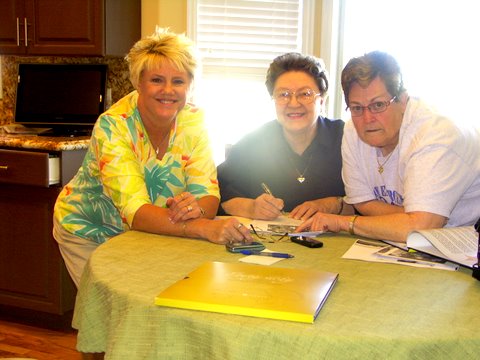 Kelley Bollinger of Cottonwood Heights, Utah,
grand daughter of Elzada Keele Kelley.
Andrea Lee Conley of Pleasant Grove, Utah,
great granddaughter of Annie Eliza Keele Lee.
Kristin Long Osterbaan of Madras, Oregon,
grand daughter of Francis Marion Keele.
Working together on Keele family history, April 2010.
 Kristin Long Osterbaan, in front of
Walker Lane, Salt Lake City property
where Francis Marion Keele
was gardener and caretaker
for Prosser family in 1930s, taken April 2010
Contributed by David and Andrea Lee Conley,
Pleasant Grove, Utah
 Home built by Francis Marion Keele
Hillsden Drive, Holladay, Utah
Photo contributed by David Conley
of Pleasant Grove, Utah April 2010
 Francis Marion Keele Home
corner of Hillsden Drive and Haven Lane
Holladay, Utah April 2010
 Francis Marion Keele and Effie Sholes Keele home
Hillsden Drive, Holladay, Utah
Effie Sholes Keele Collection
Possession of Kristin Osterbaan
Madras, Oregon
 Home in cottonwood forest of Holladay, Utah
built by Francis Marion Keele
photographed April 2010 by David Conley
of Pleasant Grove, Utah
 Home in cottonwood forest of Holladay, Utah
built by Francis Marion Keele
contributed by David and Andrea Lee Conley of Pleasant Grove, Utah April 2010
Effie Sholes Family
Rue High Sholes born 28 February 1867 Hillsdale, Hillsdale, Michigan to Reuben Hartson Sholes and Alvira Noble, married 20 April 1892 Salt Lake City, Utah Maribah Elizabeth Cunnington born 23 March 1869 Salt Lake City, Utah to John Cunnington and Minerva Melinda Higbee. Rue died 2 October 1956 Reno, Washoe, Nevada and buried Mt Olivet Cemetery, Salt Lake City, Utah. Maribah died 20 June 1939 Salt Lake City, Utah, buried Mt Olivet Cemetery, Salt Lake City, Utah. Rue Sholes, father of Effie Keele with horse
at new barn, Walker Lane, Holladay, Utah
 Click here to read entire life story of Rue High Sholes (6 pages PDF File)
as told to his daughter Effie Sholes Keele January 1956
Rue High Sholes
28 February 1867-2 October 1956
Courtesy Effie Sholes Keele Collection
Possession of Rue's great Grand daughter
Kristin Osterbaan of
Madras, Oregon
Children:
Effie Charlotte Sholes born 7 February 1893 Salt Lake City, Utah, married 25 December 1920 Francis Marion Keele . (See above)
Warren Rue Sholes born 7 November 1894 Salt Lake City, Utah, married 5 May 1923 Eva Mildred Newman born 21 February 1900 Holladay, Salt Lake, Utah to James Newman and Annette Olson. Eva Died 25 January 1927 Holladay, Salt Lake, Utah, buried Mt Olivet Cemetery. Warren died 19 Mary 1975 Phoenix, Maricopa, Arizona. Child: James Ray Sholes born 16 June 1924 Salt Lake city, Utah, married 8 November 1947 Billings, Montana Lila Lee Hitchcock born 16 January 1924 Salt Lake City, Utah to Charles Lyle Hitchcock and Dora Elizabeth Roark. Children: Betty Linda Sholes born 28 March 1949 Powell, Wyoming, married 23 November 1968 Glen Storey. Bonnie Lee Sholes born 22 April 1951 Billings, Montana, married 28 December 1975 Keith Raymond Mc Duffee.
Warren married 6 April 1928 Denver, Colorado Gladys Wilmoth Brown born 27 April 1902 to Wiley G Brown and Mary Martin. Child: Mary Ruedell Sholes born 6 September 1929 Salt Lake City, Utah, married 12 December 1954 Dan Albert Newton Central Presbyterian Church, Denver, Colorado. Warren divorced Gladys who married-Smidlin.
Warren married 7 April 1951 Raton, new Mexico (Elvira) Elva Spurlock born 31 December 1892 Ava, Missouri to John Wilburn Spurlock and Luda May Duren. Elvira's other husband G Arthur Green.
Winfield Gridley Sholes born 14 September 1898 Salt Lake City, Utah, married 15 June 1945 Las Vegas, Clark, Nevada Nona Lee Johnson born 22 July 1923 Hannibal, Marion, Missouri to William J Johnson and Barbara Lee Norman. Winfield died 15 August 1972 Las Vegas, Clark, Nevada, age 74. Children: Maribah Jean Sholes born 15 October 1946 Las Vegas, Clark, Nevada, married 26 June 1965 Samuel L Powers III. Winda Lee Sholes born 18 December 1947 Las Vegas, Clark, Nevada.
_Keele.jpg) Howard Geary Keeleand wife Ruby Susetta Langford
Howard Geary Keeleand wife Ruby Susetta LangfordPhoto contributed by Charles Martin
of Hollister, California
and Kelley Bollinger
of Cottonwood Heights, Utah
 Keele Drive in Reno, Nevada
named in honor of the Keele family.
Photo contributed by Kelley Bollinger
of Cottonwood Heights, Utah
and Charles Martin of Hollister, California
Children information from Effie Sholes Keele Collection in possession of granddaughter Kristin Long Osterbaan of Madras, Oregon.
Son Howard Geary Keele born 12 June 1900 in Panaca, Lincoln, Nevada and married 14 June 1922 in Caliente, Lincoln, Nevada Ruby Susetta Langford born 16 February 1900 Beaver, Utah, Utah to William Bethoram Langford and Clara Louisa Bohn. Ruby died 6 November 1997, buried Masonic Memorial Gardens in Mt. View Cemetery Reno, Washoe, Nevada. Howard died 11 November 1988 in Sparks, Washoe, Nevada, buried in Masonic Memorial Gardens in Reno, Washoe, Nevada.
Obituary of Ruby Langford Keele
"Find a Grave" Memorial # 34622153
"Ruby Langford Keele passed away at Physicians Hospital for Extended Care at the age of 97. She was born to William B and Clara Baker Langford. Ruby had lived in Sparks since 1944, coming from McGill, Nv. She also had lived in Caliente and Goldfield, Nv. She was a homemaker. She was a member of the American Legion, Duby Reid Post 30 in Sparks and Sun Valley Nazarene Church. She is surived by her daughter, Helen Keele Black of Sparks; seven grandchildren, nine great-grandchildren, and one great great grandchild. She was preceded in death by her husband Howard S. Keele and sister Florence Langford Baker." Ruby born 17 February 1900 Beaver, Utah, Utah."Find a Grave" Memorial # 34622153
Children: Helen Louise Keele born 23 March 1923 Caliente, Lincoln, Nevada, married 3 July 1942 Ely, White Pine, Nevada Kelley Dee Black born 8 July 1920 Blanding, San Juan, Utah to William Morley Black and Rachal Ann Hunt, and died 19 December 2003 Sparks, Washoe, Nevada, last residence and burial Verdi, Washoe, Nevada. Helen died 6 September 2004 Sparks, Washoe, Nevada, and buried Verdi, Washoe, Nevada.
Children: Karen Lucille Black born 2 November 1946 Reno, Washoe, Nevada, married 6 July 1968 Daniel John Handley, had Kyle Jason Handley born 19 December 1972 Reno, Washoe, Nevada. Karen divorced, married 22 March 1975 Gilbert Lloyd Howell Reno, Nevada. In June 1975 Loyd legally adopted Kyle.
Kellene Dee Black born 16 September 1948 Reno, Washoe, Nevada, married Henry Mosconi Jr 4 October 1969, had David Joseph Mosconi 26 June 1972 Reno, Washoe, Nevada.
Dennis Howard Black born 26 May 1954 Reno, Washoe, Nevada, married Logan Temple 3 May1975 Diane Laverne Jackson, born 11 December 1955 Allura, California to Berneil Adams Jackson and Mildred Laverne Rowley. Children: Jared Mathew Black born 15 March 1976 Reno, Washoe, Nevada and died 16 March 1976. Gavin Howard Black born 24 September 1977 Reno, Washoe, Nevada Adopted Chandra.
Norman Howard Keele born 6 July 1928 East Ely, White Pine, Nevada, and died 14 May 1970 Santa Clara, California. Married 19 July 1948 Sparks, Washoe, Nevada Morlene Evon Windhurst born 25 February 1928 Wella, Kansas to Ernest A Windhorst and Edna Allen. Norman married December 12, 1954 Reno, Nevada Barbara Lucille Stowe born 1936 Santa Barbara, California to Clearance Stowe and Ruby Elaine Spalding. Child: Sabra Ruby Keele born 18 August 1955 Reno, White Pine, Nevada, and married 31 July 1977 Jay Ross Williams. Norman married 26 January 1957 Hayward, California Diana Marie Blakely born 21 March 1934 Alameda, California to Orris Blakely and Sabrina Lydia Bickford. Children: Laurie Colleen Keele born 6 March 1961 Castro Valley, Alameda, California, Heather Maurene Keele born 29 October 1963 Castro Valley, Alameda, California, and Kathleen Anne Keele born 19 November 1964 Castro Valley, Alameda, California.
"Norman H. Keele, native of Ely, died in Union City, California May 1970. He had lived in Reno and worked for Isbell Construction until he moved to California 14 years ago. He was born 6 July 1928. Funeral will be held Sunday in Fremont, California and buried Monday. The survivors inclulde his parents Mr. and Mrs. Howard Keele of Sparks, sister Helen Black, wife Diane Keele, and daughters Sabra Keele, Laurie Heather Keele, and Kathleen Keele all of Union City, California." Obituary Nevada State Journal 21 May 1970.
"Norman H. Keele, 41, died at Los Gatos. Wife Diane M. Keele, father Howard G. Keele, daughters Laurie C, Heather M, Kathleen. Held in the Fremont Chapel." Obituary 16 May 1970 Fremont, Neward, California.
 William Vernon Fitzgerald and wife Ireta Keele
Photos contributed by Kelley Bollinger
of Cottonwood Heights, Utah
and Charles Martin of Hollister, California
Children: Geraldine Fitzgerald born 3 March 1923 Pioche, Lincoln, Nevada, married 26 July 1945 Carson City, Washoe, Nevada Harry Kenton Gould. Harry born 8 February 1921 Pittsfield, Summerset, Maine to Earl Benson Gould and Ada May Williams. Children: Janeen Gould born 3 September 1957.
Bruce Keele Fitzgerald born 14 December 1929 Pioche, Lincoln, Nevada, died 4 October 1995 Reno, Washoe, Nevado, and buried Mountain View Cemetery, Reno, Washoe, Nevada. Married 14 March 1948 Gardnerville, Nevada Marjorie Lou Hinckley born 11 January 1930 Sparks, Washoe, Nevada to Jackson Stewart Hinckley and Alice Lucille Mitchell. Listed with wife Margie in Reno, Nevada 1950 working as clerk at PayLess. Children: Mary Catherine Fitzgerald born 14 August 1948 Sacramento, California. Bruce Craig Fitzgerald born 4 September 1949 Sacramento, California. Debra Christine Fitzgerald born 28 December 1950 Reno, Washoe Nevada. Cheryl Lynn Fitzgerald born 21 January 1952 Reno, Washoe, Nevada. Divorce from Mildred L. Fitzgerald 20 April 1971 Washoe, Nevada.
Barbara Jean Fitzgerald born 14 December 1929 Pioche, Lincoln, Nevada. Listed Reno, Nevada 1950 working for the Natl Coal Co. Married 29 November 1950 Jerry Dean Torvinen born 12 June 1929 Tacoma, Washington to Roy Tano Tarvinen and Ora Vivian Sparling. Children: Mark Dean Torvinen born 22 September 1953 Reno, Washoe, Nevada. Gregg Bruce Torvinen born 9 September 1954 Reno, Washoe, Nevada. Michael John Torvinen born 23 November 1955 Reno, Washoe, Nevada.
Mary Joan Fitzgerald born 15 June 1932 Pioche, Lincoln, Nevada, married 5 March 1950 Virginia City, Nevada Glen Homer Richards born 9 March 1929 Carlin, Nevada to George Homer Richards and Katherine Tisdail. Child: Terri Lee Richards born 28 February 1951 Reno, Washoe, Nevada.
Joyce Ellen Fitzgerald born 13 September 1934 Pioche, Lincoln, Nevada, married 18 November 1951 Reno, Washoe, Nevada Paul Joseph Stimac born 23 January 1927 Mountain Iron, Minnesota to Marko Stimac and Lucy Bilman. Children: Barbara Ann Stimac born 31 December 1953 Monterey, California. Steven Paul Stimac born 12 December 1954 Reno, Washoe, Nevada.

Isabelle Olson Keele and husband Orval Geary Keele
Photos contributed by Kelley Bollinger
of Cottonwood Heights, Utah
and Charles Martin of Hollister, California
Son Orval Geary Keele born 10 April 1905 in Panaca, Lincoln, Nevada, married 30 October 1926 in Pioche, Lincoln, Nevada Isabella Gunilla Olson born 4 February 1907 in Caliente, Lincoln, Nevada to Hans Olson and Isabella Mitchell. Isabelle died 26 November 1992 in San Joaquin, California and Orval died 25 May 1964 in Los Angeles, Los Angeles, California. 1930 Census Caliente, Lincoln, Nevada with father-in-law Hans Olson, working as a stationery engineer for steam railroad.
 Back row: Isabelle Gunville Olson, Orval Geary Keele,
Isabelle LaVonne Keele. Front: Thomas Quincy Keele.
Children: Orval Hans Keele born 28 August 1927 in Milford, Millard, Utah, died 9 December 1928 Caliente, Lincoln, Nevada, and buried Caliente City Cemetery.
Isabell LaVonne Keele born 2 August 1929 Caliente, Lincoln, Nevada, and married 30 July 1951 Las Vegas, Clark, Nevada Lynn Junior Conner born 8 August 1927 Turlock, Stanislaus, California, son of Lynn Hiram Conner and Elizabeth Margaret Schoonhaven.Isabelle died 26 November 1992, Lynn died 7 May 1993. Child: Isabell Kathleen Conner born 13 May 1952 Tracy, Joaquin, California, married 4 January 1975 in San Joaquin, California Edward Hoyt Formosa born14 April 1952 Alameda, California.
Thomas Quincy Keele born 3 January 1937 Caliente, Lincoln, Nevada, married 1 November 1954 Rivera, Los Angeles, California Lou Ann Ruth Davis born 1 November 1936 St. Louis, Missouri, daughter of Chester Leland Davis and Louis Helen Brown. Child: Daniel Thomas Keele born 14 December 1955 Rivera, Los Angeles, California. Thomas married 26 December 1970 Los Angeles, California Dorcas Nicholas Turner age 52. Dorcas born 30 September 1918, and died 14 February 1988 Odessa, Ector, Texas. Thomas died November 1988 Odessa, Ector, Texas.

